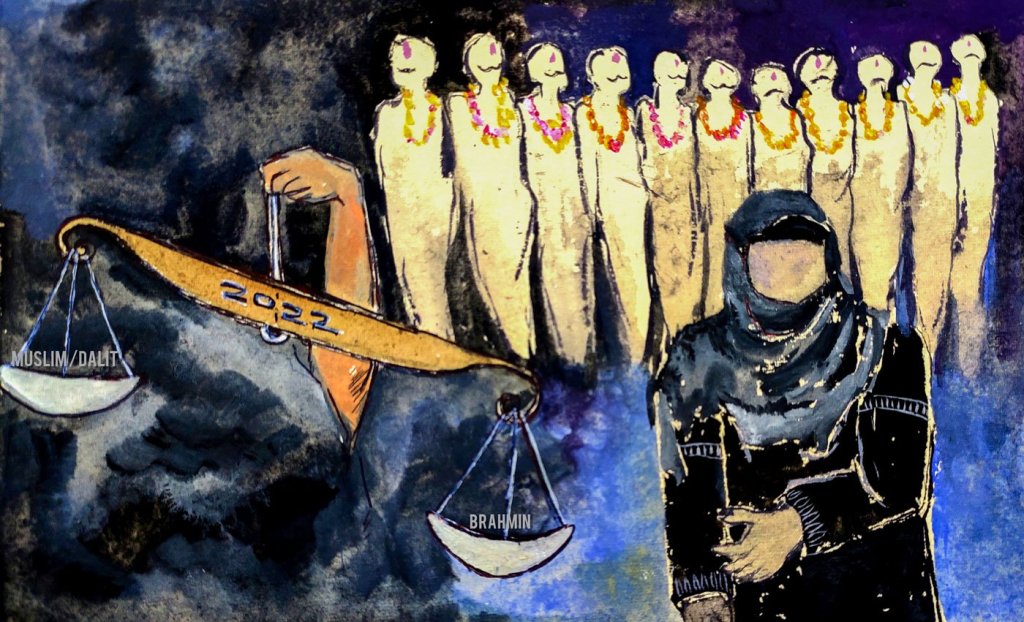
In the haunting aftermath of the 2002 Gujarat riots, Bilkis Bano, a pregnant woman, fell victim to a brutal gang rape by a mob. The recent legal turmoil stems from the Gujarat government’s contentious decision in August 2022 to release 11 men convicted of this heinous crime, citing good behaviour. The subsequent legal battle culminated in the Supreme Court’s recent ruling, ordering the convicts back to prison.
The trial, initially transferred to a special court in Maharashtra by the Supreme Court, resulted in the conviction of the 11 men who were sentenced to life imprisonment. The Gujarat government’s decision to release them prompted legal challenges. The Supreme Court, in its recent ruling, declared the remission granted by Gujarat as illegal and beyond its jurisdiction, highlighting the intricate legal journey.

Advocate Vrinda Grover, representing the petitioners, emphasized the court’s scrutiny of the arbitrariness in the Gujarat government’s exercise of discretion. The court found the remission notices lacking legal power and nullified the 2022 order, deeming it obtained fraudulently. This nullification underscored the court’s commitment to upholding the rule of law.
The 2022 release of convicts heightened concerns over witness safety, revealing reports of intimidation and threats against Bilkis Bano and others. The subsequent withdrawal of police protection deepened apprehensions, and legal cases against the convicts remained unresolved. The recent Supreme Court decision provides a glimmer of relief for the victim and witnesses, yet challenges persist in ensuring a secure environment and addressing the broader implications of the case. Balancing justice with the safety of those involved remains a complex endeavour in the aftermath of the 2002 Gujarat gang rape, underscoring the intricacies of the legal and societal dimensions at play.

The legal saga unfolded when one the 11 sought early release, introducing jurisdictional ambiguity on Gujarat or Maharashtra’s decision. The Supreme Court’s ruling in favour of Gujarat and reliance on the 1992 remission policy proved pivotal. This policy, relevant during conviction, significantly influenced the convicts’ release, setting the stage for subsequent legal complexities and battles, emphasizing the intricate interplay of jurisdictional nuances and policy dynamics in the quest for justice in the aftermath of the 2002 Gujarat riots.
The political dimension surrounding the case intensified with statements from certain leaders endorsing the release, raising questions about the politicization of justice. The involvement of high-ranking officials and politicians during the time of the riots, added complexity to the case.
The recent Supreme Court decision nullifying the remission and ordering the convicts back to jail underscored the court’s dissatisfaction with the earlier order. The bench criticized the Gujarat government for using the court order to violate the rule of law, emphasizing the fraudulent means employed and suppression of crucial facts.
While the recent Supreme Court decision brought relief to Bilkis Bano and her family, they refrain from declaring victory, exhibiting cautious optimism. Their faith in the judiciary and the ongoing legal proceedings keeps them vigilant. Living in an undisclosed location since the convicts’ release in 2022, the family awaits the conclusive end of this arduous legal battle.
The legal intricacies of the Bilkis Bano case provide insight into the complex interplay of justice, entwined with political nuances, jurisdictional uncertainties, and the essential commitment to uphold the rule of law. With the imminent return of the 11 convicted men to prison, the case serves as a poignant reminder of the delicate balance required when navigating legal complexities against societal expectations of justice. The pursuit of justice in the aftermath of the 2002 Gujarat riots navigates a multifaceted terrain encompassing political, legal, and societal dimensions. This intricate journey compels the nation to confront its historical legacy and aspire to build a future that embodies justice, equity, and fairness. The case stands as a testament to the ongoing struggle to harmonize legal intricacies with the collective yearning for a more just and equitable society, emphasizing the perpetual need for transparency, accountability, and compassion in the pursuit of justice.
visit arjasrikanth.in for more insights
 SOCIAL PERSPECTIVES