“In the face of foreign media onslaughts, India’s legal system stands strong, protecting conglomerates like Adani. A positive journey through the recent Supreme Court ruling unveils the resilience of our legal framework.”
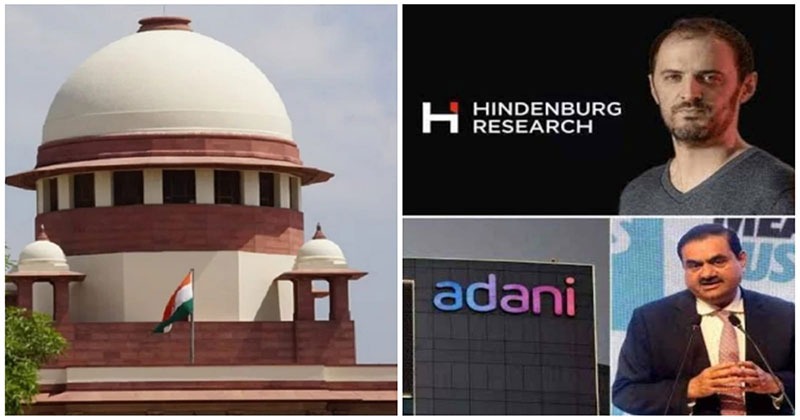
In the dynamic landscape of India’s economic growth, recent events surrounding the Adani conglomerate have sparked debates, accusations, and legal scrutiny. However, amidst the storm, the country’s legal system has demonstrated its robustness, assuring investors and conglomerates that the rule of law prevails. This article explores the positive aspects of the recent Supreme Court ruling, highlighting the significance of legal integrity in protecting and fostering economic growth.
In a landmark ruling, the Supreme Court of India upheld the probe panel’s report in the Adani hidden case, dismissing doubts about the integrity of the investigation. The court’s decision, emphasizing no grounds for criminal investigation, reflects a commitment to legal due process. Importantly, the court refused to order a probe by the Central Bureau of Investigation (CBI), affirming faith in the existing regulatory mechanisms.
The Securities and Exchange Board of India (Sebi), a key player in the regulatory framework, played a pivotal role in the Adani case. The court acknowledged Sebi’s competence in investigating market manipulation allegations and endorsed the probe conducted by the regulatory body. Moreover, the court suggested measures to enhance the regulatory mechanism, underscoring the commitment to continuous improvement and adaptability.
Following the Supreme Court’s decision, Gautam Adani, the founder of the Adani Group, expressed gratitude on social media, emphasizing the principle of “Satyamev Jayate” (truth alone triumphs). Adani’s acknowledgment of those who stood by him reflects a positive perspective on the legal process. His assertion that the truth has prevailed echoes the confidence in the legal system’s ability to discern fact from speculation.
While the legal landscape triumphs, political narratives surrounding the Adani case remain contradictory. The Congress party, on one hand, maintains allegations of manipulation and systemic abuse against the Adani Group. However, the Chief Minister of Telangana, Revanth Reddy, engaged in discussions with Adani Group representatives, highlighting the dual nature of political interactions with business entities.
The Adani case underscores the delicate balance between promoting industrial growth and navigating political complexities. The Bharatiya Janata Party (BJP) questions the Congress party’s stance, raising concerns about permissions sought before political representatives meet business leaders. This juxtaposition emphasizes the intricate dance between economic development and political scrutiny.
As India stands at the threshold of a new year, the economic outlook remains promising. The positive resolution of the Adani case signifies a commitment to fair and transparent legal processes. However, challenges persist, including geopolitical events and fluctuations in oil prices. The upcoming elections add another layer of complexity, requiring a harmonious balance between economic aspirations and political considerations.
In conclusion, India’s recent experience with the Adani case illuminates the resilience of its legal system and the positive impact it has on economic prosperity. The Supreme Court’s unwavering commitment to due process and transparency sends a reassuring message to investors and conglomerates alike. As the nation strides into the future, the harmonious coexistence of legal integrity and economic growth will undoubtedly shape India’s narrative on the global stage.
visit arjasrikanth.in for more insights
 SOCIAL PERSPECTIVES