“Punjab’s Battle Against the Drug Menace: A Call for Balance in Tackling Supply and Demand”
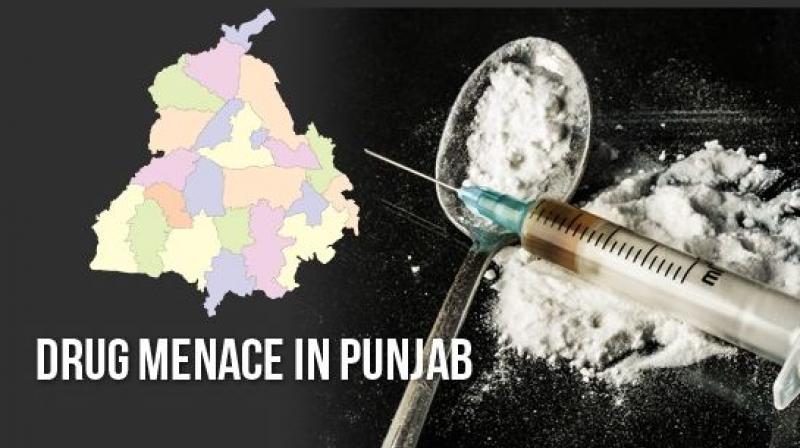
For over a decade, the idyllic fields of Punjab have been marred by an insidious drug crisis, tearing apart families and ensnaring the youth. Emerging from the shadows of post-militancy Punjab, the drug menace has transformed from a mere transit point on the golden crescent trade route into a rampant consumer-driven epidemic. In this comprehensive exploration, we delve into the profound impact of the drug menace on rural Punjab, emphasizing the urgent need for a balanced and all-encompassing approach that addresses both the supply and demand sides of this crisis.
The aftermath of failed militancy and the subsequent rise of “Narco-terrorism” laid the foundation for Punjab’s entanglement in the illicit drug trade. Positioned strategically on the traditional golden crescent route, Punjab became a conduit for the flow of drugs from Afghanistan to Pakistan and then to Delhi, ultimately reaching global destinations. However, the paradigm shift occurred when the people of Punjab started consuming drugs, setting the stage for a crisis that would grip the entire state.
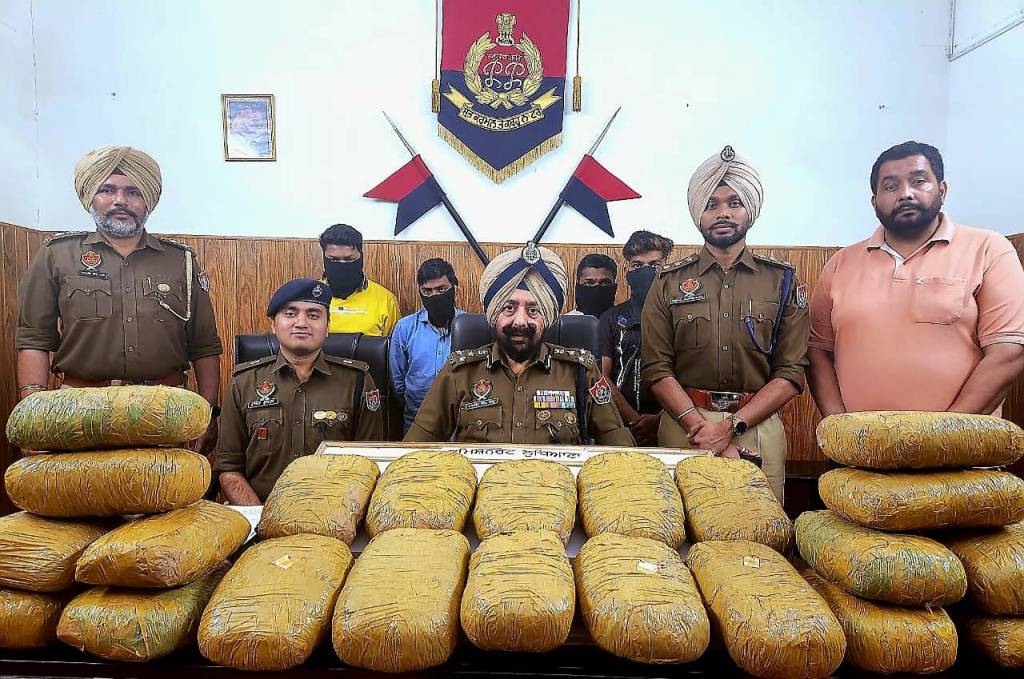
A gram of heroin, fetching anywhere between ₹1,000 to ₹5,000, becomes a lucrative enterprise for those struggling with poverty and unemployment. With no need for qualifications or interviews, drug peddling presents a quick and tempting route to financial gain. The lack of rehabilitation measures only intensifies the cycle, turning drug trade into a family business. Some of the recent investigations reveal a concerning trend – an increasing involvement of women in the direct drug trade. Traditionally dominated by men, data from over 11,000 NDPS cases (Narcotic drugs and psychotropic substances) between April 2022 and February 2023 suggests that women now account for over 10% of such cases, marking a significant departure from the scenario observed in 2016.
Attributing the rise of women in the drug trade to various factors, investigators, highlight the entrapment of families with a history of drug involvement in a vicious cycle. The lack of rehabilitation and societal stigma propel families towards drug peddling, turning it into an unfortunate family business. This trend is exacerbated in South Western regions like Malwa, (It is the largest region in terms of area and has 15 districts in it, the largest of which are Ferozepur, Ludhiana, Patiala, and Bathinda.) where economic hardships and poverty create fertile ground for involvement in the drug trade.
A closer examination of female drug peddlers reveals a concentration in the Malwa region, characterized by high population density and pockets of poverty. In areas where traditional occupations pay poorly, the allure of quick and easy money from the drug trade becomes irresistible. The lack of job opportunities and economic prospects further exacerbates the issue, making drug peddling an appealing alternative for survival.
The drug crisis exacts an immeasurable toll on families, especially those with children. Visiting villages and homes where multiple family members have been arrested for drug-related offenses paints a grim picture. Children, left without proper guidance and stigmatized by society, face an uncertain future. The cycle perpetuates itself as the lack of education and opportunities further diminishes their chances of breaking free from the clutches of drug involvement.
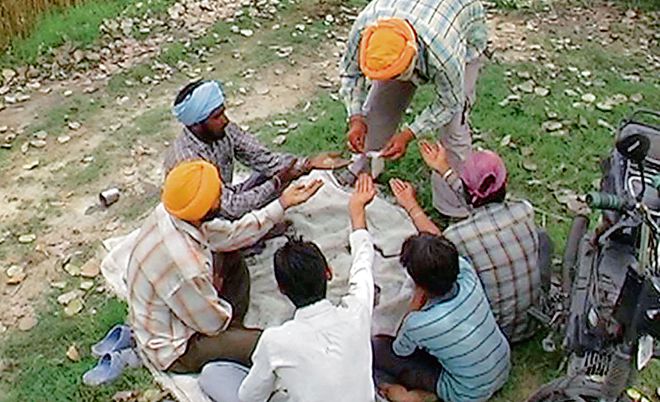
Beyond legal consequences, families involved in drug peddling face severe social stigma. Neighbors and community members distance themselves, fearing the influence of drug-related activities on their own families. The fear of the drug crisis spreading to their children prompts communities to ostracize families caught in the web of addiction and peddling.
A recurring issue highlighted by investigators is the lack of thoroughness in the investigation process. Drawing parallels with an investigation conducted seven years ago, one notes a distressing trend – the reuse of identical details in multiple FIRs (First Information Reports). This indicates a lack of diligence in collecting evidence and tailoring cases to individual circumstances. The implications of such oversight raise questions about the veracity of arrests and the efficacy of the justice system in curbing the drug menace.

Punjab stands at a pivotal moment in its prolonged struggle against a deeply entrenched drug menace that has silently permeated its rural fabric for over a decade. The consequences are stark—families torn asunder, children bereft of guidance, and communities burdened by the weight of stigma. The urgency for a comprehensive approach is glaring, calling for a nuanced balance between cracking down on the drug supply chain and implementing initiatives that tackle the root causes of demand.This crisis, born from the shadows of post-militancy Punjab, has transformed from a mere transit point on the golden crescent trade route into a rampant consumer-driven epidemic. Recent investigations shed light on the evolving role of women in the drug trade, with over 10% of cases involving them. This demographic shift underscores the need for a nuanced understanding of the issue.
Socioeconomic factors propelling the drug trade are acutely visible in the Malwa region, marked by high population density and pockets of poverty—a fertile ground for the insidious trade to thrive. The dearth of job opportunities and economic prospects propels individuals, especially women, into the drug trade as a desperate means of survival. Families, ensnared in a vicious cycle of addiction and lacking rehabilitation, find themselves further entangled. In response, Punjab must transcend its troubled history and envisage a future where its youth can flourish without succumbing to the clutches of drugs. A harmonized strategy is imperative—combining intensified law enforcement against kingpins
 SOCIAL PERSPECTIVES