“Minimizing Words, Maximizing Impact: Unravelling the Leadership Style of India’s Foreign Affairs Minister”
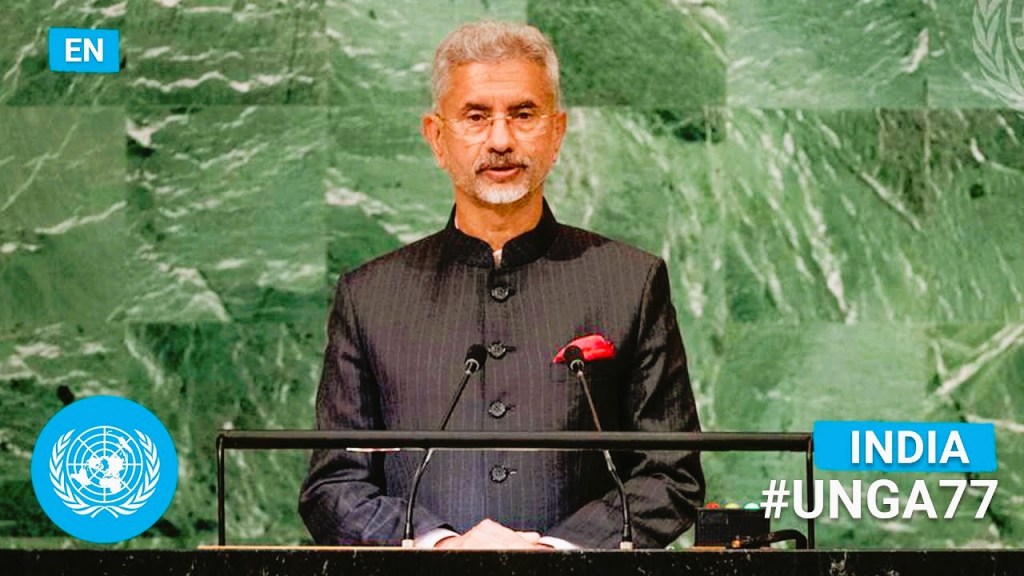
In the dynamic landscape of international diplomacy, few figures stand out for their unwavering commitment to clarity and decisive action. JaiShakar, India’s Foreign Affairs Minister, is one such distinctive leader who minces no words when it comes to addressing global challenges. His unique style of expression and commitment to calling a spade a spade have earned him respect not only among Indians but on the global stage. In a recent powerful speech addressing the UN General Assembly, Jaishankar showcased his prowess in navigating complex issues, cementing India’s position at the forefront of global affairs.
The 78th UNGA’s theme, “Rebuilding Trust and Reigniting Global Solidarity,” served as a backdrop to JaiShakar’s speech, where he expressed felicitations to the President of the General Assembly, H.E. Dennis Francis. Jaishankar articulated India’s vision of ‘One Earth, One Family, One Future,’ emphasizing a commitment to the well-being of many rather than a narrow focus on the interests of a few. This article delves into the key aspects of his speech, shedding light on India’s role in addressing global challenges and shaping the future of international relations.
Jaishankar began his address by acknowledging the exceptional period of turmoil that the world is currently witnessing. Structural inequities, uneven development, the Covid-19 pandemic, and ongoing conflicts have compounded challenges for the Global South, rolling back socio-economic gains. In this context, Jaishankar highlighted India’s exceptional responsibility when it assumed the Presidency of the G20, advocating for a world where unity prevails over discord and shared destiny eclipses isolation.
Jaishankar emphasized the need for diplomacy and dialogue as the only effective solutions in a sharply polarized world. The New Delhi Summit exemplified India’s commitment to diverse and inclusive international order. By convening the ‘Voice of the Global South’ Summit and admitting the African Union as a permanent member of the G20, India provided a platform for previously marginalized voices, setting an example for reform in older organizations like the United Nations.
The Foreign Affairs Minister highlighted India’s willingness to engage with a broad range of nations, evolving from the era of non-alignment to that of ‘Vishwa Mitra’ (a friend to the world). The Quad’s rapid growth, the expansion of the BRICS grouping, and the emergence of the I2U2 combination showcase India’s commitment to working with diverse partners in an open-minded manner, defining the emerging multipolar order.
Jaishankar made it clear that India’s pursuit of becoming a leading power is not for self-aggrandizement but to take on greater responsibility and make meaningful contributions. Initiatives like the Vaccine Maitri, International Solar Alliance, and Coalition for Disaster Resilient Infrastructure highlight India’s commitment to global well-being. The nation has built development partnerships with 78 nations, demonstrating solidarity and providing assistance in times of crisis.
The outcomes of the New Delhi G20 Summit were presented as both larger policies and specific initiatives, addressing issues ranging from gender divide and climate action to responsible AI harnessing. The Action Plan for Sustainable Development Goals, High Principles of LiFE, and the Green Development Pact shape India’s approach to the planet’s future, emphasizing the transformative role of Digital Public Infrastructure and women-led development.
India’s progress towards achieving SDGs was highlighted, with a focus on reducing global poverty by lifting 415 million people out of it. The country’s achievements in financial inclusion, food and nutrition, health, water supply, energy, and housing contribute significantly to meeting SDG targets. Jaishankar encouraged other nations to draw inspiration from India’s successes, emphasizing the importance of expanding capacities and regaining confidence.
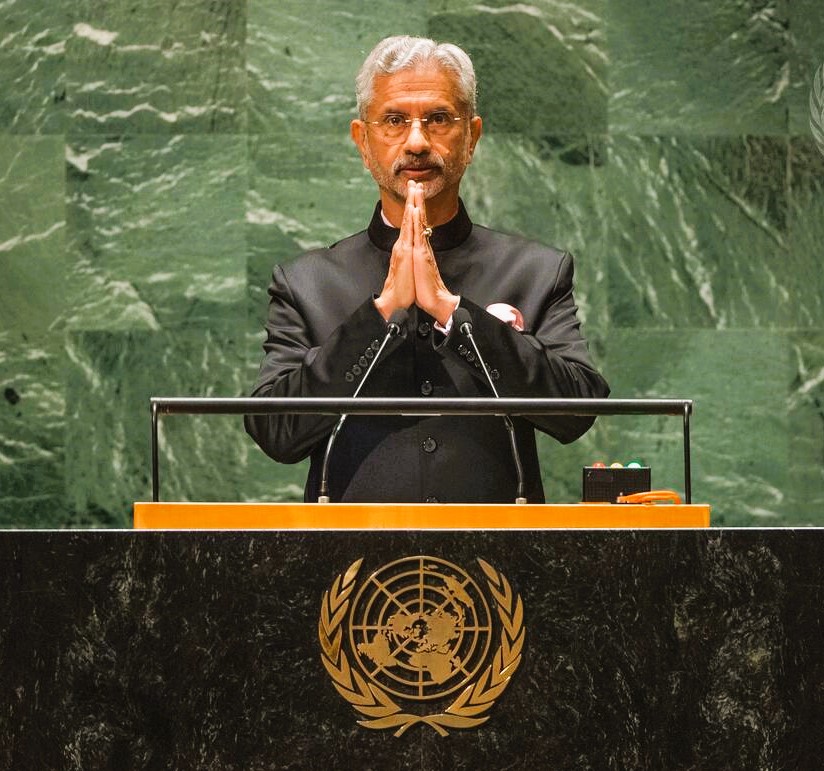
Jaishankar advocated for a fair, equitable, and democratic order, challenging the dominance of a few nations in shaping global norms. He emphasized the need to address challenges such as vaccine apartheid, climate action evasion, and the misuse of market power. Calling for genuine solidarity, Jaishankar asserted that a rules-based order would only be effective when applied equally to all nations.
Jaishankar sees this as a significant opportunity to drive change, champion fairness, and reform multilateralism. He calls for a global commitment to address challenges with the understanding that we are one earth, one family, with one future.
JaiShakar’s speech at the UN General Assembly underscores India’s assertive role in global affairs, driven by a fusion of tradition and technology. From diplomatic initiatives to global collaborations and contributions, India, under JaiShakar’s leadership, stands as a beacon for unity, cooperation, and inclusive progress on the world stage. As the nation enters the Amrit Kaal, a quarter-century of progress and transformation, the world watches with anticipation, recognizing India’s unique position in shaping a more equitable and interconnected future.
visit arjasrikanth.in for more insights
 SOCIAL PERSPECTIVES