“Celebrating the Legacy of Sattiraju Lakshminarayana on His Birth Anniversary”

On December 15, 1933, a creative force was born in Narsapur, Andhra Pradesh, India – Sattiraju Lakshminarayana, fondly known as Bapu. His multifaceted talents encompassed Indian cinema, painting, illustration, cartooning, screenwriting, music, and design. As we commemorate his birth anniversary, it’s time to reflect on the profound impact Bapu had on Telugu and Hindi cinema, his contributions to Indian art, and the indelible mark he left on the cultural tapestry of the nation.
Bapu’s directorial journey in cinema is studded with gems that have stood the test of time. His film “Sakshi” (1967) earned international recognition at the Tashkent International Film Festival in 1968. “Seeta Kalyanam” (1976) graced prestigious film festivals like BFI London, Chicago International, San Reno, and Denver. The film has become a part of the curriculum at the British Film Institute. “Tyagayya” (1981) and “Pelli Pustakam” (1991) premiered at the Indian Panorama of the International Film Festival of India. Bapu’s magnum opus, “Sri Rama Rajyam” (2011), was specially screened at the International Film Festival of India.
His cinematic prowess extended beyond regional boundaries, with Bapu directing notable Hindi films such as “Hum Paanch,” “Woh Saat Din,” “Prem Pratigyaa,” and “Paramaatma.” His storytelling transcended language barriers, captivating audiences across India.
Bapu’s canvas extended beyond the silver screen. As a painter, his focus on Hindu mythological characters, particularly his pictorial rendition of the Ramayana, showcased his artistic brilliance. His portrayals of characters like Shiva, Bhima, Duryodhana, Krishna, and Rama were characterized by distinctiveness and a profound understanding of mythology.
His paintings adorned the covers of magazines both in India and abroad. Notably, Telugu Naadi Magazine in the United States featured Bapu’s exceptional artwork. The National Film Theatre in London hosted exhibitions of his art, including “Bapu Bomma,” “The Navarasas,” and “Indian Dances.” These exhibitions added an international dimension to his artistic acclaim.
Bapu’s collaboration with Mullapudi Venkataramana, fondly known as Ramana, marked the beginning of an iconic duo. Starting as classmates in Taylor High School, Narasapuram, their association evolved into a formidable writer-producer-illustrator-filmmaker team. Together, they created cinematic marvels that enriched Telugu cultural ethos. Films like “Sampoorna Ramayanam,” “Ramanjaneya Yuddham,” and “Seeta Kalyanam” became milestones, capturing the essence of Telugu storytelling.
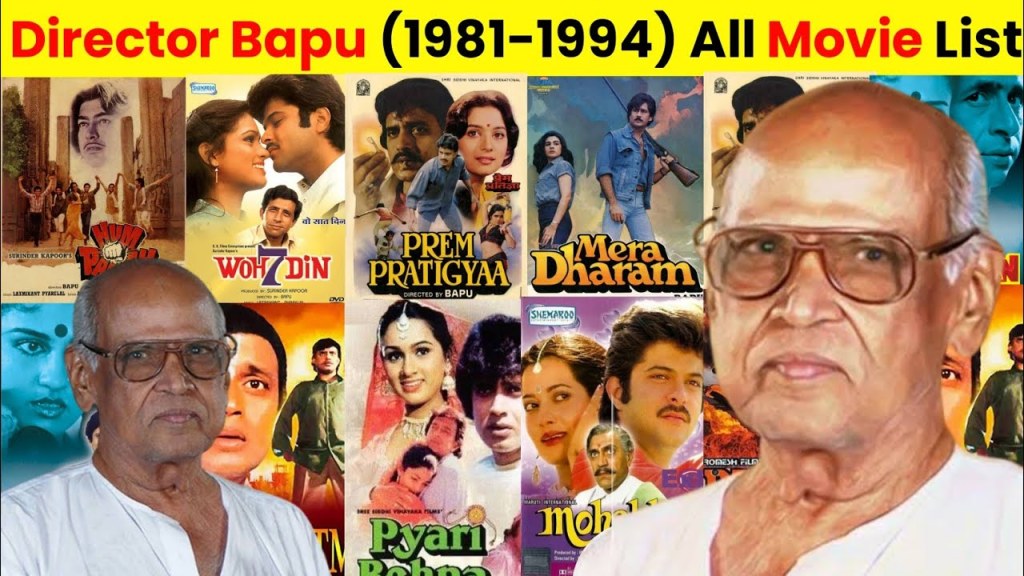
Their contribution to historical films such as “Thyagayya,” “Bhakta Kannappa,” and “Shreenatha Kavisarvabhouma” solidified their place in the annals of Telugu cinema history. Bapu and Ramana’s synergy delivered timeless classics, leaving an indelible imprint on the industry.
Bapu’s impact extended beyond cinema. In 1964, he participated in a UNESCO-sponsored seminar on Children’s Books, and in the same year, he provided demonstrations for a UNESCO-sponsored training course on book illustrations and cover designs in Chennai. He served as an art consultant for the Ford Foundation-sponsored Southern Language Book Trust in the 1960s.
The legendary artist worked as a graphic artist for renowned agencies like J Walter Thomson, Efficient Publicities, and F. D. Stewarts in Chennai. His artistic contributions weren’t confined to the realm of cinema; he illustrated numerous books, receiving accolades and government awards for his efforts.
On August 31, 2014, the world bid farewell to Bapu, the cinematic maestro and artistic luminary. However, his legacy lives on through the timeless films, captivating paintings, and influential illustrations he left behind. His artistic journey, marked by awards like the Padma Shri, National Honors, Filmfare Awards, and a Filmfare Lifetime Achievement Award, continues to inspire generations.
As we celebrate the birth anniversary of Sattiraju Lakshminarayana, let us remember Bapu for his unparalleled contributions to Indian cinema and art. His ability to seamlessly weave narratives on celluloid and canvas has left an everlasting impact on the cultural heritage of the nation. Bapu’s artistic spirit continues to resonate, reminding us of the transformative power of storytelling and the enduring magic of visual expression.
visit arjasrikanth. in for more insights
 SOCIAL PERSPECTIVES