In the wake of demonetization, the Indian government aimed to create a cashless economy, imposing withdrawal limits and emphasizing the need for fool proof identification in financial transactions. However, recent events have brought to light an astonishing discovery – ₹353 crores in cash stashed in premises linked to Congress Rajya Sabha MP Dhiraj Sahu, raising questions about the effectiveness of post-demonetization measures.
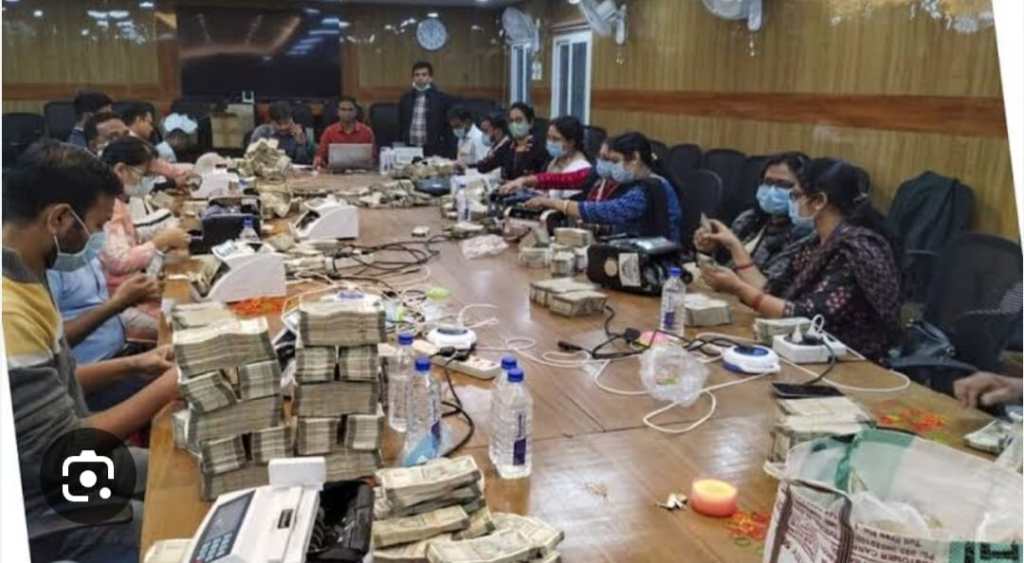
India, in the aftermath of demonetization, experienced a significant transformation in its financial landscape. The government’s push toward a digital economy, coupled with stringent measures like withdrawal limits and mandatory identification, aimed to curb black money and promote transparency. However, the recent revelation of ₹353 crores in fresh notes challenges the narrative of a successful demonetization.
The Income Tax raids on premises linked to Congress MP Dhiraj Sahu uncovered an unprecedented ₹353 crores in cash. Sahu, a prominent Congress figure, is now at the centre of a political storm, with the BJP alleging a nexus between Congress and corruption. The immense scale of this cash seizure marks a pivotal moment in India’s ongoing battle against illicit funds.
Despite the government’s efforts to minimize cash transactions, large amounts of cash continue to emerge in operations like the one targeting Dhiraj Sahu. The counting process itself became a spectacle, involving 176 bags of cash, three banks, and 40 currency counting machines. This raises critical questions about the efficacy of demonetization and whether it inadvertently led to the hoarding of fresh notes.
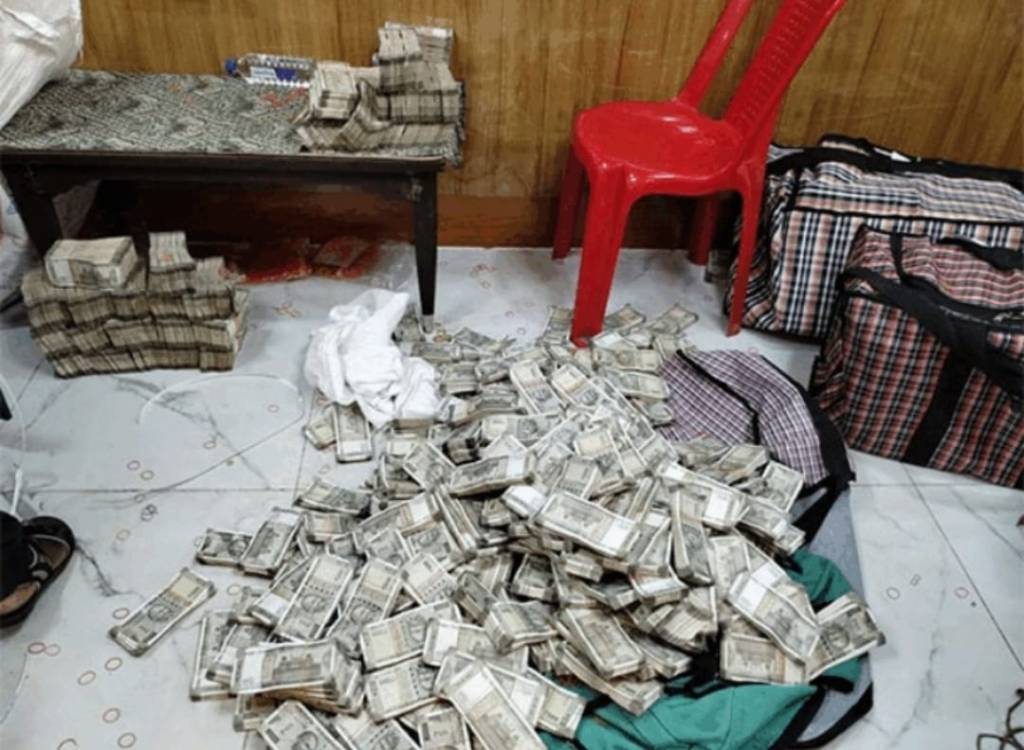
One of the primary objectives post-demonetization was to promote digital transactions. However, the recent cash discoveries indicate that the shift towards a cashless economy may not be as seamless as envisioned. The allure of hard cash, especially in colossal amounts, continues to challenge the transition to a fully digital financial ecosystem.
Dhiraj Sahu’s case serves as a wake-up call, prompting a re-evaluation of India’s financial discipline and the efficacy of anti-black money measures. The question arises: Is the abolishment of ₹500 notes the solution? Would it lead to a surge in digital transactions, making the accumulation of hard money a near-impossible feat? As India grapples with these questions, it becomes imperative to reassess and reorient the strategies in place.
Critics argue that demonetization, while disrupting the existing cash flow, failed to address the root causes of black money accumulation. The cash seized from Dhiraj Sahu’s premises raises concerns about the extent of such hoarding and whether other prominent figures are engaging in similar practices. The BJP’s reference to past instances of large cash seizures during demonetization further complicates the narrative.
The ₹353 crore cash saga unfolds against the backdrop of demonetization’s aftermath, revealing the complexities and challenges inherent in India’s financial landscape. As political narratives clash, it is crucial to address the core issues – the efficacy of demonetization, the resilience of the cash-centric system, and the need for a robust digital transition. Dhiraj Sahu’s case serves as a microcosm of a broader issue, necessitating a comprehensive and reflective approach to reshape India’s financial trajectory. In the grey zone between demonetization’s objectives and unintended consequences, the nation must chart a course toward a more transparent and accountable financial future.
visit arjasrikanth.in for more insights
 SOCIAL PERSPECTIVES