“Beyond Divisive Politics: Upholding Constitutional Values in Legislative Dynamics”
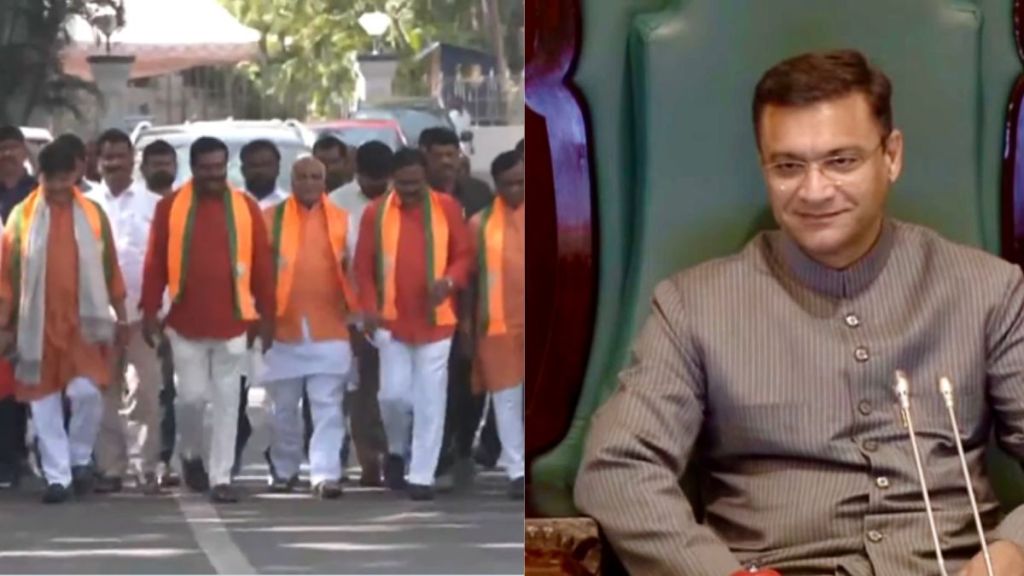
The recent oath-taking ceremony in the Telangana Legislative Assembly has stirred controversy, bringing to the forefront questions about the appointment of Pro Term Speaker Akbaruddin Owaisi. As the political landscape becomes embroiled in debates over traditions, seniority, and alleged political understanding, it is crucial to reflect on the foundational principles of democracy and the importance of unity within diversity. This article delves into the events surrounding the appointment of the Pro Term Speaker and emphasizes the need for elected representatives to rise above divisive actions for the collective welfare of the state.
The appointment of Akbaruddin Owaisi as the Pro Term Speaker has become a point of contention, with the BJP raising objections and opting to boycott the oath ceremony. The BJP alleges a violation of assembly rules, arguing that the tradition of appointing a senior leader as Pro Term Speaker has been overlooked in favor of political alliances.
Telangana BJP Chief G Kishan Reddy’s objection highlights the delicate balance between tradition, seniority, and the political landscape. However, amidst these debates, it is essential to emphasize the overarching principle that should guide legislative processes—the adherence to the constitution.
Regardless of political affiliations, religious backgrounds, or ideological differences, the assembly is a sacred space where constitutional values must be paramount. The oath-taking ceremony symbolizes the commitment of elected representatives to uphold the constitution and serve the people. In this context, the appointment of a Pro Term Speaker should align with the spirit of equality enshrined in the constitution.
The objection raised by the BJP underlines the importance of preserving established norms. Still, it is equally crucial to ensure that these norms align with the democratic principles that underscore the constitution. All elected representatives, irrespective of their party or religious affiliations, should have an equal opportunity to participate in the legislative process.
The decision of newly elected BJP MLAs to boycott the oath ceremony is a symbolic protest against what they perceive as a deviation from established traditions. This move emphasizes the role of symbolism in politics and draws attention to the delicate balance between tradition and evolving political dynamics.
However, as the state grapples with this symbolic protest, it is pertinent to reiterate that the assembly should be a space for dialogue, collaboration, and representation. A boycott, though symbolic, risks further polarization and undermines the very essence of democratic governance.
In the midst of these controversies, it is crucial for elected representatives, including Pro Term Speaker Akbaruddin Owaisi, to rise above divisive actions and prioritize the collective welfare of the state. The assembly is a microcosm of society, encompassing diverse voices and opinions. Upholding the principles of equality and representation within this space is fundamental to the democratic fabric of the nation.
Elected representatives have a responsibility to transcend party lines, religious affiliations, and personal biases. The focus should shift towards collaborative efforts that address the needs and aspirations of the people. In the larger context, the appointment of a Pro Term Speaker should be viewed as an opportunity for unity, rather than a source of discord.
As the controversy surrounding the Pro Term Speaker appointment unfolds in the Telangana Legislative Assembly, it is imperative to anchor the discourse in constitutional values. The constitution does not discriminate; it upholds the equality of all individuals, emphasizing that within the assembly, all are equal.
Elected representatives should heed the call to transcend divisive actions and work collectively for the welfare of the state. The oath-taking ceremony and the subsequent events should serve as a reminder of the sacred duty entrusted to every legislator—to serve the people with integrity, irrespective of personal beliefs or party affiliations.
In navigating the intricate tapestry of democracy, let the principles of unity, equality, and representation guide the actions of those who have been chosen to represent the diverse voices of the people. The true strength of a democratic assembly lies in its ability to harmonize the myriad perspectives within, fostering a collective journey toward progress and prosperity.
visit arjasrikanth.in for more insights
 SOCIAL PERSPECTIVES