“Navigating the Storm: Chennai’s Struggle Against Cyclone ‘Michaung’ Reveals Deep-Rooted Challenges”
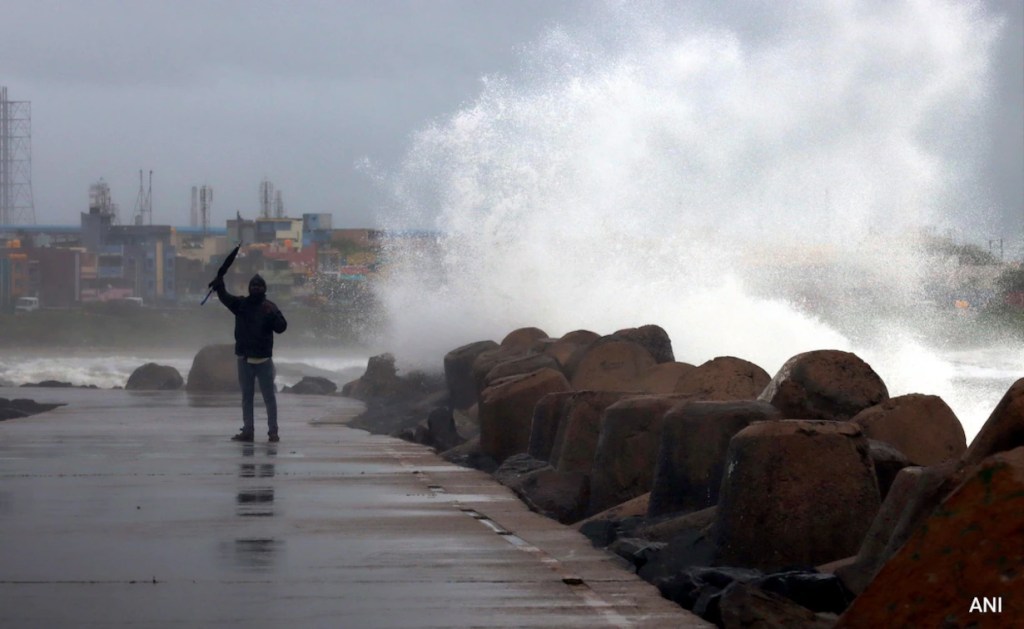
In a stark contrast to Mumbai’s resilience in the face of cyclones, the recent havoc caused by Cyclone ‘Michaung’ has left Chennai submerged and grappling with severe infrastructure breakdowns. This article delves into the multifaceted challenges that have contributed to the city’s vulnerability, exploring the intricate web of urbanization, population explosion, and systemic failures.
Chennai, often touted as the ‘Detroit of India’ for its thriving automobile industry, finds itself grappling with the aftermath of Cyclone ‘Michaung.’ Unlike its western counterpart, Mumbai, Chennai’s infrastructure seems woefully unprepared for the recurrent floods and waterlogging. Unraveling the reasons behind this discrepancy involves navigating through the rapid urbanization, population explosion, and systemic failures that have plagued the city over the years.
The rapid urbanization of Chennai over the last few decades has been nothing short of exponential. From a population of 53.5 lakhs in 1991, the city has ballooned to a staggering 1.19 crores in 2023. This unprecedented growth has overstressed the city’s water resources, setting the stage for catastrophic consequences during cyclones and heavy rainfall. The influx of people, lured by education, job opportunities, and a burgeoning urban lifestyle, has contributed to Chennai’s population density skyrocketing to over 26,000 people per square kilometer.
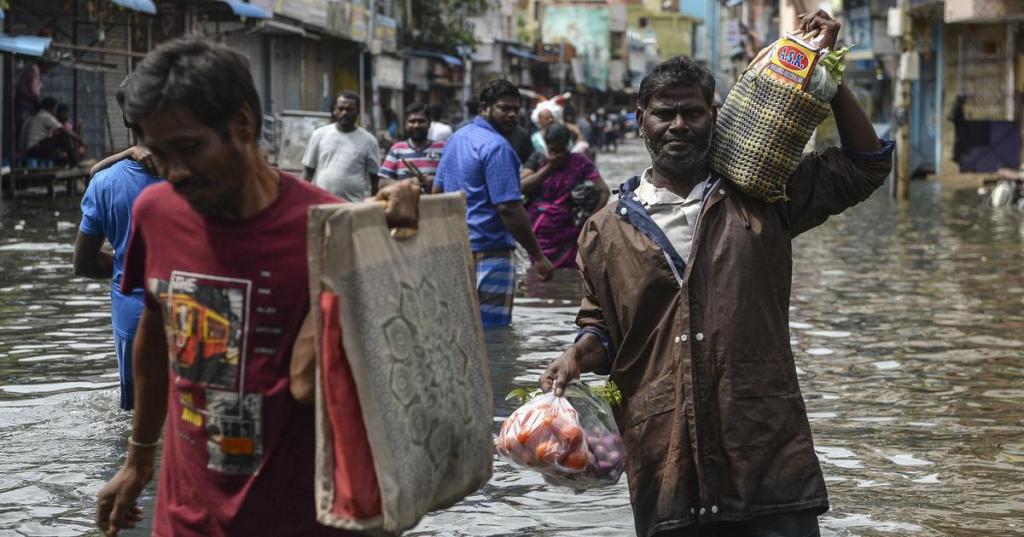
One of the glaring issues contributing to Chennai’s recurrent flooding is its failed drainage system. The city, nestled between three rivers and surrounded by seven lakes within a 100-kilometer radius, continues to battle waterlogging despite its geographical advantages. The drainage system, compromised by untreated sewage, disposal of solid waste, and encroachment, struggles to handle the heavy influx of water during monsoons. The larger water bodies, crucial for flood discharge, face challenges such as reduced width due to encroachment, flattened bed slopes, and obstructed drains, exacerbating the crisis.
The recent havoc wreaked by Cyclone ‘Michaung’ has laid bare Chennai’s vulnerability. The city witnessed a shutdown with local transport facilities coming to a halt, and the air traffic blocked, showcasing the devastating impact of the cyclone. Incessant rainfall, strong winds, and inundation in low-lying areas have resulted in casualties, destroyed infrastructure, and marooned hundreds. The cyclical nature of floods in Chennai, exacerbated by the cyclonic impact, demands a comprehensive examination of the city’s preparedness and response mechanisms.
Chennai’s environmental degradation significantly contributes to its susceptibility to floods. Deforestation to accommodate the booming population has disrupted the city’s natural drainage system. The destruction of crucial water bodies, such as Pallikaranai wetlands, Adayar River, and the Cooum River, has eliminated the city’s natural flood control system. Wetlands, once capable of holding excess water, have been systematically encroached upon or sold, leaving Chennai defenseless against the deluge.
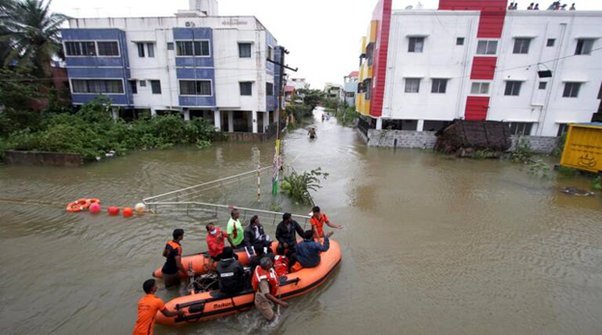
Chennai’s recurring battles with floods highlight the need for a collaborative approach. The government, tasked with urban planning and infrastructure development, must address issues such as inadequate drainage systems, deforestation, and encroachment. Simultaneously, the public plays a crucial role in waste management. Indiscriminate disposal of waste, especially plastic, exacerbates blockages in drainage systems, compounding the impact of heavy rainfall.
Amid the challenges, Chennai’s resilience has shone through in community initiatives and social media-driven assistance. The Army, Navy, and Air Force have been deployed for rescue operations, and citizens have effectively utilized platforms like Twitter and Facebook to coordinate relief efforts. Support groups, NGOs, and even celebrities have stepped in to provide shelter, food, and assistance, showcasing the spirit of the Chennaivasi.
The aftermath of Cyclone ‘Michaung’ serves as a sobering reminder of Chennai’s vulnerability and the urgent need for strategic urban planning. As the city grapples with the environmental toll, inadequate infrastructure, and population pressures, a collaborative effort between the government and the public is imperative. Chennai’s journey towards resilience demands a comprehensive overhaul of drainage systems, sustainable urban planning, and environmental conservation. Only through concerted efforts can the ‘Detroit of India’ navigate the storm and emerge stronger, ensuring that the monsoon misery becomes a tale of transformation rather than recurring tragedy.
visit arjasrikanth.in for more insights
 SOCIAL PERSPECTIVES
One response to ““Chennai’s Monsoon Misery: Unraveling the Cyclone ‘Michaung’ Fallout and Infrastructural Flaws””
None of the points mentioned are new. However, we failed to take any action on these mainly becuase we ignore these events as one of the rare occurrence. In the wake of Climate change I am sure we are going to see many more such events. Time to take some hard hitting decisions.
Padmanabhan
LikeLike