“Decoding the Powers of Governors in the Democratic Quilt: An In-Depth Analysis”

In the intricate tapestry of Indian democracy, the role of governors in the legislative process takes center stage, especially when it comes to the approval of bills. This article, delves into the nuanced dynamics of governors’ roles in shaping the legislative landscape.
At the heart of democratic principles lies the supremacy of elected governments. Yet, the appointment of governors as custodians of the constitution adds complexity to the power dynamics. The article initiates by setting the stage, emphasizing the delicate balance between elected representatives and nominated officials. Moving into the core of the matter, the article explores the critical role governors play in the legislative process. Post-passage of a bill by the legislative assembly, the governor’s approval becomes the gateway to its transformation into law. This examination sets the tone for unravelling the intricate dance between elected representatives, assemblies, and governors.
Article 200 of the Constitution emerges as a crucial piece in this legislative puzzle. It outlines four options available to governors after the passage of a bill: granting assent, withholding assent, returning the bill for reconsideration, or, in specific cases, reserving it for the President’s approval. This constitutional framework becomes the canvas on which the governors paint their decisions.
A shift in focus reveals the unique position governors hold as agents of the union government, despite their appointments at the state level. The Supreme Court’s perspective treats governors as constitutional offices, often directing notices to the Ministry of Home Affairs and the secretary of the governor. This layer of the analysis adds depth to understanding governors’ roles in a federal structure.
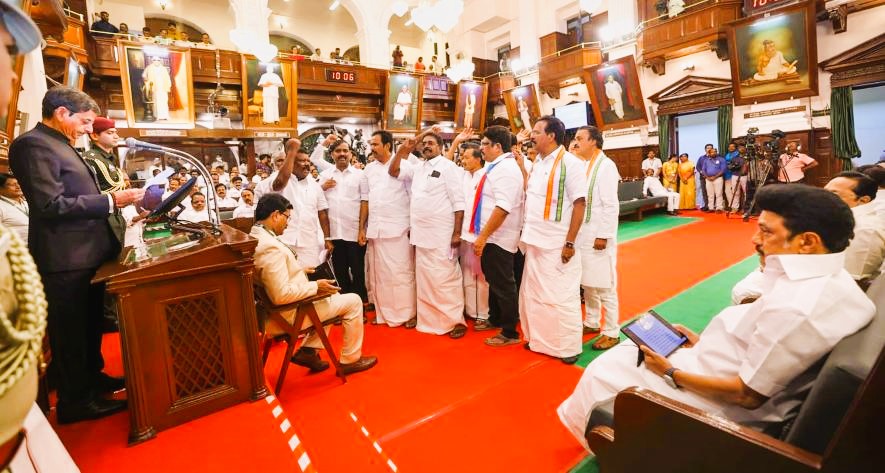
As the narrative unfolds, the complexities inherent in the interpretation and exercise of governors’ authority take centre stage. While the Constitution expects governors to act on the advice of the cabinet, real-world instances of conflict between governors and state governments, particularly in opposition-rule states, highlight the inherent challenges.
The historical roots of the governor’s role, stretching back to the Government of India Act of 1935, come to light. Post-independence, the Constituent Assembly’s deliberations underscore the ornamental and nominal nature of the governor’s position. This historical perspective forms the backdrop for understanding the evolution of governors’ roles.
A critical juncture in the exploration unveils the considerable discretion wielded by governors, particularly in the passage of bills. Article 200 grants them the power to decide on bills passed by the legislature, leading to a delicate balance between legislative primacy and gubernatorial discretion. The article navigates through instances of this conundrum, especially in states where the opposition holds sway.

Recent cases, exemplified by Arif Mohammed Khan in Kerala and Aryan Ravi in Tamil Nadu, showcase a recurring issue – governors withholding assent for extended periods. With the Constitution lacking a prescribed timeline, state governments seek Supreme Court intervention, urging for defined timelines for governors to follow. This legal dimension brings clarity to the often-contested issue of temporal constraints on gubernatorial decisions.
The exploration deepens into the grey areas surrounding governors’ actions, particularly the absence of a constitutional timeframe for governors to act on bills. Opposition-rule states grappling with delayed approvals approach the Supreme Court, seeking clarity on the governor’s role when withholding assent indefinitely. This unresolved aspect raises critical questions about governors’ authority.

Drawing parallels with speaker disqualification timelines, concerns arising from the absence of fixed timeframes for disqualification proceedings. The comparison between constitutional offices, namely governors and speakers, emphasizes the complexities involved in dealing with timelines within democratic processes.
As opposition-rule states present their cases before the Supreme Court, seeking clarity on governors’ timelines, the role of the judiciary in defining constitutional norms becomes paramount. While the Constitution refrains from specifying timelines, the courts emerge as pivotal actors in ensuring checks and balances within the democratic framework.
The grey areas and complexities surrounding the governor’s authority, especially in the absence of fixed timelines, call for a revaluation of constitutional norms. As India navigates the evolving landscape of democratic governance, defining the delicate balance between elected representatives and nominated custodians becomes imperative for upholding the essence of democracy.
visit arjasrikanth.in for more insights
 SOCIAL PERSPECTIVES