Revisiting Delhi’s Odd and Even Scheme Amidst Air Pollution Concerns”
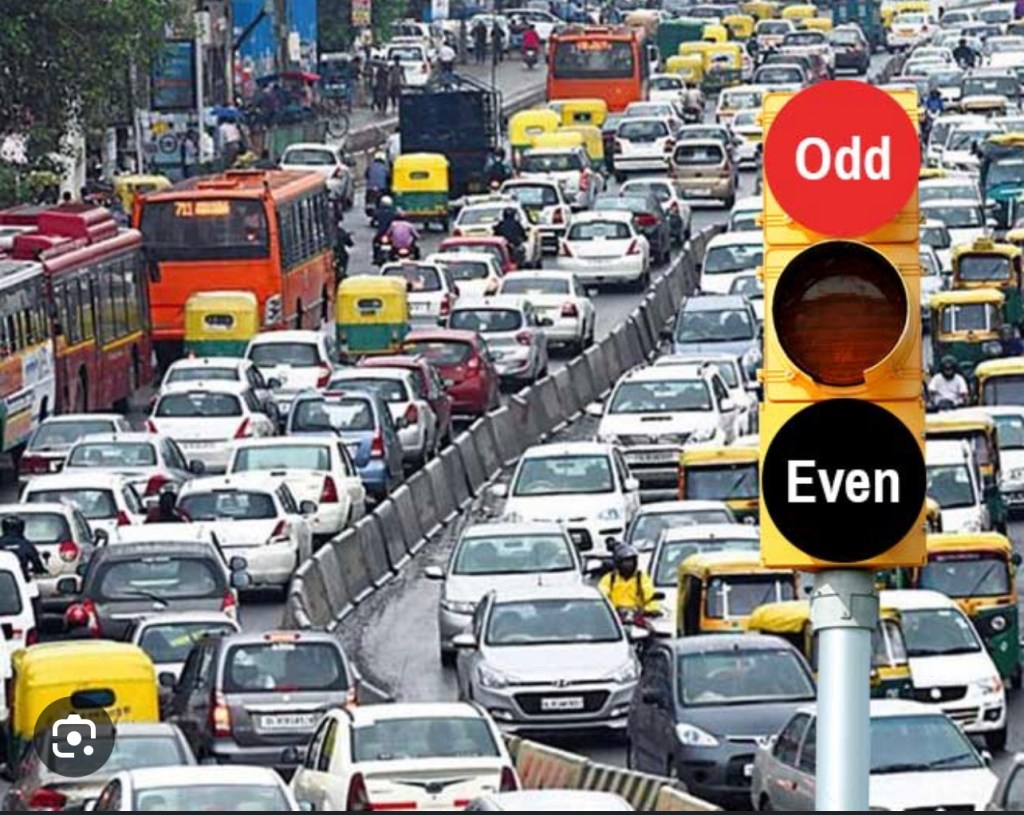
Delhi’s Odd and Even Scheme has been a subject of discussion and debate since its inception. While it has had some positive impacts, it’s essential to acknowledge that it alone cannot be the silver bullet to solve the perennial problem of air pollution that plagues the city every November.
The scheme has undoubtedly contributed to reducing traffic congestion and offered a brief respite from escalating pollution levels. It follows the simple concept of odd and even numbers, but its execution is far more complex. During its implementation, there were significant shifts in travel schedules and exemptions for various modes of transportation, which hindered its effectiveness.
The impact on air quality, especially during the second phase of the scheme, left much to be desired. PM2.5 levels showed only marginal reductions in specific areas but failed to have a significant impact on the overall air quality of the city. The reasons behind this shortfall were multifaceted, including shifts in commuting patterns and the expansion of exempted vehicles.
Efforts to curb air pollution and protect public health are laudable, but they should be comprehensive and address the various factors contributing to the problem. While the Odd and Even Scheme was a step in the right direction, it cannot be viewed as a stand-alone solution. Air pollution in Delhi is the result of complex interactions between vehicular emissions, agricultural practices (such as stubble burning), and meteorological conditions.
Delhi, which often faces “severe plus” air quality levels, requires a multipronged approach to tackle its air pollution crisis effectively. Solutions need to encompass stricter emission norms, promotion of public transportation, controlling industrial emissions, and incentivizing clean energy practices. These measures should not be last-minute interventions but well-thought-out, long-term strategies.

Identifying odd and even numbers has practical importance in fields such as mathematics, but it’s vital to remember that air quality is not as simple as odd and even digits. Solving Delhi’s air pollution problem requires a systematic approach that takes into account the city’s unique challenges, including traffic congestion, industrial pollution, and geographical factors.
While odd and even numbers are crucial for mathematical and computer science applications, addressing Delhi’s air pollution challenges requires a broader perspective. The Odd and Even Scheme, in isolation, may seem like a mountainous effort, but the mountain of Delhi’s air pollution issues needs to be scaled with more comprehensive and sustained measures.
A collaborative effort from the government, industry, and citizens is essential. Increased awareness, stringent pollution control measures, and investments in clean and sustainable technologies are the need of the hour. It’s time to tackle the air pollution issue in Delhi with a holistic, year-round approach instead of relying solely on temporary restrictions like the Odd and Even Scheme.
The Odd and Even Scheme’s impact was noteworthy, but it is only a small piece of the puzzle. To clear the air in Delhi, the city must look beyond this scheme and focus on the systematic, long-term changes needed to address the root causes of air pollution. Delhi deserves clean, breathable air throughout the year, not just during the fleeting weeks of the Odd and Even rule.
Visit arjasrikanth.in for more insights
 SOCIAL PERSPECTIVES