Delhi, the bustling metropolis and the national capital of India, finds itself caught in the grip of an alarming air pollution crisis. Each year, as winter descends upon the city, Delhiites brace themselves for the inevitable blanket of toxic smog that engulfs their lives. The city’s Air Quality Index (AQI) spirals out of control, creating a public health emergency and forcing residents to don masks, stay indoors, and seek refuge from the noxious air.

The practice of stubble burning, especially in the states of UP, Punjab and Haryana, has emerged as a significant contributor to this annual environmental catastrophe. This article delves into the compulsion that drives farmers to resort to stubble burning, the profound consequences it inflicts upon Delhi’s air quality, and the urgent need for a comprehensive solution to break this perilous cycle.
Stubble burning is a common agricultural practice employed by farmers in the northern states of India, especially Punjab, Haryana, and Uttar Pradesh. This practice involves the deliberate ignition of crop residue, primarily the remnants of paddy straw, in the fields after the harvest, to clear the land quickly for the subsequent wheat crop. This practice, although destructive, is often perceived by farmers as a compulsion driven by several factors.
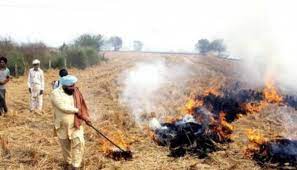
One of the primary drivers of stubble burning is the narrow time window available to farmers between the harvesting of the paddy crop and the sowing of the subsequent wheat crop. This limited timeframe, usually lasting two to three weeks, leaves farmers with little choice but to resort to stubble burning as the quickest and cheapest method of clearing their fields. Any delay in sowing wheat can adversely affect the wheat crop, leading to economic losses for the farmers.
Complicating matters further, the practice of burning crop residue coincides with the festive season, notably during Diwali, a time when firecrackers add to the already heightened air pollution levels in Delhi. Research shows that stubble burning on Diwali alone contributes between 5-8% to Delhi’s overall PM2.5 pollution levels, underscoring the urgency of addressing this issue.
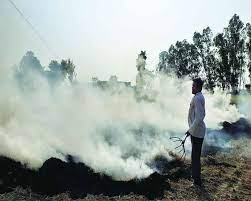
The smoke generated by stubble burning contains a cocktail of hazardous pollutants, including particulate matter (PM), carbon monoxide, and nitrogen oxides. These pollutants pose severe health risks and have a calamitous impact on Delhi’s air quality. The particulate matter, particularly PM2.5, can soar up to 60 times the World Health Organization’s safe limit, creating an environment ripe for respiratory illnesses, heart issues, and other health problems.
While stubble burning plays a significant role in degrading Delhi’s air quality, it is not the sole contributor. Industries in and around Delhi, vehicular emissions, and other sources also play their part. For instance, a study conducted by the Indian Institute of Technology (IIT) Delhi found that vehicular emissions contribute to approximately 25% of Delhi’s PM2.5 levels. Hence, addressing stubble burning alone is insufficient to combat the multifaceted problem of air pollution in the region.
Beyond the immediate consequences on air quality, stubble burning has far-reaching effects on soil fertility, economic development, and the environment. The destruction of valuable nutrients in the soil results in a decline in soil fertility, impacting crop yields. A more sustainable approach to managing crop residue, such as utilizing it for economic benefit or converting it into organic fertilizer, can provide a win-win solution for both farmers and the environment.

The prime contributors to the alarming air pollution levels in North India are the indiscriminate stubble burning practices of farmers in Punjab and Haryana. While the issue of air pollution due to crop residue burning has been escalating over the past few years, the need for effective solutions has become more pressing than ever.
Previous studies have conclusively shown that stubble burning contributes to approximately 20% of the PM2.5 mass concentration in Delhi during the burning season. Moreover, it is a significant source of major gaseous pollutants, including greenhouse gases (GHGs), nitrogen oxides (NOx), sulfur oxides (SOx), and various particulate matter (PM10 and PM2.5), causing severe human and environmental health issues. This practice results in the release of an astonishing amount of pollutants, including carbon monoxide, carbon dioxide, methane, and nitrous oxide, further deteriorating air quality.
In the agricultural heartlands of northern India, particularly Punjab and Haryana, the urgency to prepare fields swiftly for the wheat crop after harvesting rice leaves farmers with limited alternatives. A practice known as ‘paddy stubble burning’ emerges as a quick but harmful solution. Year after year, Punjab alone sees the collective burning of approximately 7 to 8 million metric tonnes of leftover plant debris in the months of October and November. The process is not a matter of choice but a result of the minimal time available between rice and wheat crops, making it a compulsion for many.
In recognition of the environmental crisis, the government of Punjab introduced measures to address the issue. In 2020, about 8,000 nodal officers were appointed in villages to monitor and curb stubble burning. The central government, understanding the severity of the situation, introduced new legislation to combat air pollution in the Delhi-NCR region. The ordinance dissolved the Environment Pollution (Prevention and Control) Authority (EPCA), indicating the government’s commitment to addressing the problem.
The National Human Rights Commission (NHRC) has been at the forefront of addressing the rise in pollution levels in Delhi-NCR. The commission recently brought the chief secretaries of Delhi, Punjab, Haryana, and Uttar Pradesh to discuss the issue of stubble burning. Following the deliberations and considering the responses of the states, the NHRC stated that farmers are compelled to burn stubble due to the failure of state governments in providing harvest machines and other requisite measures. The NHRC emphasized that it is the collective failure of the four state governments—Delhi, Punjab, Haryana, and Uttar Pradesh—that has led to the alarming levels of stubble burning, causing an excessive amount of pollutants in the air. The NHRC rightly pointed out that blaming the farmers for stubble burning is unjust, given the compelling circumstances they face. The commission has further requested the chief secretaries to appear for the next hearing on the matter and submit their responses within four days positively, indicating its commitment to finding a solution.
Addressing the menace of stubble burning necessitates a multi-pronged approach that involves the government, farmers, and other stakeholders. Some potential solutions and measures include: The government should introduce effective and economically viable technologies and infrastructure to assist farmers in managing crop residue. The ‘Happy Seeder’ is one such innovation that can help farmers transition away from stubble burning ; Shall encourage, farmers to diversify their crop choices, moving away from paddy, can significantly reduce the dependence on stubble burning ; Organizing local awareness programs to educate farmers about the harmful effects of stubble burning and providing them with viable alternatives is essential ; Agricultural scientist M.S. Swaminathan’s proposal to establish ‘Rice Bio Parks’ in key states can convert stubble into useful products, such as cardboard, paper, and animal feed ; Farmers engaging in stubble burning should face penalties, and they should be excluded from the benefits of the Minimum Support Price (MSP) scheme. Instead of burning stubble, the government should incentivize the conversion of crop residue into organic fertilizer, fodder, or fuel, supporting industries involved in this conversion.

The government has taken several measures to combat stubble burning, including : Dstributing over 23,000 crop residue management machines to farmers for on-site management of straw ; Launching the ‘Promotion of Agricultural Mechanization for In-Situ Management of Crop Residue’ scheme in 2018, focusing on machinery distribution, the establishment of Custom Hiring Centres (CHCs), and Information, Education, and Communication (IEC) activities ; Appointing 8,000 nodal officers in villages in Punjab to curb stubble burning ; The central government introducing legislation to tackle air pollution in the Delhi-NCR region
Exploring alternative solutions to stubble burning can effectively address this problem. Some of these alternatives include: Promoting paddy straw-based power plants to generate electricity, creating both energy and employment opportunities ; Converting crop residues into organic manure through composting ; Exploring new industrial uses for crop residue, such as yeast and protein extraction ;Incorporating crop residues into soil to improve moisture retention and encourage the growth of beneficial microorganisms.

Interventions from the National Green Tribunal (NGT) and the Supreme Court have played a pivotal role in addressing stubble burning. In December 2015, the NGT banned crop residue burning in Uttar Pradesh, Punjab, Haryana, and Rajasthan. The Supreme Court, in November 2019, directed the governments of these states to provide financial incentives to farmers who refrain from stubble burning. The Supreme Court has underscored the importance of offering incentives to farmers who abstain from stubble burning and penalizing those who continue this practice. It also urged that the existing Minimum Support Price (MSP) scheme be reinterpreted to enable states to withhold benefits from farmers engaged in stubble burning.
Chhattisgarh, a state renowned for its innovative approach, has devised a pioneering model known as ‘Gauthans.’ These are five-acre plots held in common by villages where unused stubble or crop residue is collected and converted into organic fertilizer using natural enzymes and cow dung. This innovative approach has generated employment opportunities for rural youth and won government support. Chhattisgarh has successfully established around 2,000 ‘Gauthans,’ providing a shining example of a sustainable solution to stubble burning.

Stubble burning poses an acute threat to Delhi’s air quality and public health. While farmers resort to this practice due to compulsion, a comprehensive and holistic approach is essential to break the cycle of destruction. Government measures, technological innovations, and legal interventions can play a pivotal role in curbing stubble burning and protecting the environment. It is imperative that all stakeholders work in unison to address this pressing issue and develop sustainable alternatives to stubble burning, ensuring cleaner air for Delhiites and a brighter future for generations to come. The need for collective action to tackle this critical challenge cannot be overstated, and the time to act is now.
visit arjasrikanth.in for more insights
 SOCIAL PERSPECTIVES