The birth of Andhra Pradesh and its subsequent division – a journey through time.
Andhra Pradesh, a name that resonates with a rich tapestry of history, culture, and progress. Located on the southeastern coast of India, this state has been a significant contributor to the nation’s growth and development. With its diverse landscape, iconic cities, and a unique blend of traditions, Andhra Pradesh was once a symbol of unity and prosperity. However, the passage of time has brought about a significant transformation, replacing the unity that once defined the state with a sense of division and uncertainty.
The formation of modern Andhra Pradesh, as we know it today, is a story deeply rooted in linguistic identity, aspirations, and political manoeuvring. On the 1st of November, 1956, the state of Andhra Pradesh was born, merging the Telugu-speaking areas of Andhra State with the Telugu-speaking regions of the erstwhile Hyderabad State, with Hyderabad as its capital. This momentous event was realized through the enactment of the States Reorganisation Act of 1956, aimed at creating linguistic states across India. The birth of Andhra Pradesh was celebrated as a victory for the Telugu-speaking people, marking the beginning of an era of growth and development.
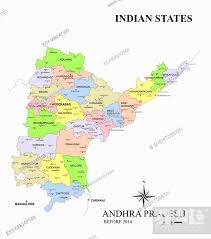
The idea of a united Andhra Pradesh did not materialize overnight. It germinated from the Visalandhra movement, a vision of a Greater Andhra, where all Telugu speakers would find a home within a single state. Led by the Communist Party of India, this movement ardently advocated the merger of all Telugu-speaking areas into a unified state. It was a vision that deeply resonated with the aspirations of the Telugu people.
After a series of negotiations and struggles, Andhra Pradesh was finally realized in 1956, with Hyderabad, a vibrant city steeped in history, emerging as the capital of the new state. The state’s first chief minister, Tanguturi Prakasam, assumed leadership, laying the foundation for a prosperous future.
Over the years, Andhra Pradesh witnessed the rise of leaders who left an indelible mark on the state’s development. The Indian National Congress governed the state from 1956 to 1982, with Neelam Sanjiva Reddy serving as the first chief minister. Among the notable chief ministers, P. V. Narasimha Rao implemented significant land reforms and reservation policies, promoting social equality. The construction of irrigation projects, including the Nagarjuna Sagar Dam and Srisailam Dam, significantly enhanced agricultural production in the state.
In 1983, the Telugu Desam Party, led by the charismatic N. T. Rama Rao, won the state elections, breaking the long-standing monopoly of the INC. NTR’s tenure saw transformative changes in the state’s administration, with the introduction of mandals to replace taluks, the removal of hereditary village heads, and the launch of e-governance initiatives. Under his leadership, Andhra Pradesh embarked on a journey towards becoming a technology hub, attracting numerous tech companies to establish their presence in Hyderabad.
In 2004, the INC returned to power, with Y.S. Rajashekara Reddy, or YSR, becoming the new chief minister. His focus was on social welfare schemes and initiatives such as free electricity for farmers, health insurance, and tuition fee reimbursement for the underprivileged. He also took over the free emergency ambulance service, operating it as a government project.
YSR’s tragic death in a helicopter crash in 2009 marked a turning point in the state’s political landscape. His successor, Konijeti Rosaiah, and later Nallari Kiran Kumar Reddy faced the daunting task of managing the impending division of the state to create Telangana. This division evoked memories of past separatist movements, particularly the Telangana movement in 1969 and the Andhra movement in 1972. The formation of the Telangana Rashtra Samithi (TRS) in 2001, led by Kalvakuntla Chandrashekar Rao (KCR), rekindled the Telangana movement, ultimately leading to the decision to establish the new state of Telangana in December 2009.
The struggle between those in favor of Telangana and those advocating for a united state became a defining chapter in Andhra Pradesh’s history. To address the situation, the Srikrishna committee was formed and submitted its report in December 2010. The Indian parliament subsequently passed the Andhra Pradesh Reorganisation Act, creating Telangana with Hyderabad as its capital, while the remaining areas retained the name Andhra Pradesh. The division, however, left several issues unresolved, including disputes over the division of assets and river waters between the two states.

The bifurcation of Andhra Pradesh in 2014 had a profound impact on the state’s political landscape, economy, and social fabric. In the last elections held in the united state in 2014, the Telugu Desam Party secured a mandate, with N. Chandrababu Naidu becoming the chief minister. His leadership marked a new chapter in the state’s governance, with the government’s headquarters shifting to the greenfield capital, Amaravati. However, the division brought its share of challenges. Interstate issues with Telangana, including disputes over the division of assets and river waters, have remained unresolved. The question of Hyderabad’s status as a joint capital also lingers, and the division has had lasting economic consequences for both states.
In the 2019 elections, the political landscape took a significant turn. Y.S. Jagan Mohan Reddy, the son of former Chief Minister Y.S. Rajashekara Reddy, led the Yuvajana Sramika Rythu Congress Party (YSRCP) and won a convincing victory. Jagan’s campaign highlighted the need to shift the focus from Amaravati and address the broader issues facing the state, including healthcare, education, and social welfare. Under Jagan’s leadership, the government shifted its attention to welfare activities, aiming to provide better healthcare, education, and support to the marginalized sections of society. While this approach garnered significant support, it also faced criticism for the financial burden it imposed on the state.

The story of Andhra Pradesh’s formation and subsequent division is a testament to the complex interplay of history, politics, and identity. The state’s journey from a united Andhra Pradesh to the divided Andhra Pradesh and Telangana has been marked by triumphs and tribulations, unity and division.
While the seeds of bifurcation may have been sown in 2009, the impacts are still felt today. The division has led to a sense of confusion and imbalance, with one side having the capital and the other facing a brain drain, affecting the youth and the economic prospects of the state. The sacrifices made for the formation of the state in 1956 on the same day now stand as historical events, with a bittersweet legacy.
In the end, it is the people of Andhra Pradesh who have been most affected by this division. As they navigate the challenges of a post-bifurcation world, they continue to uphold the cultural richness, historical significance, and aspirations that have defined their state. The question of who gained and who lost in this division may remain open, but one thing is clear – the story of Andhra Pradesh’s past and future is an enduring narrative of resilience and hope in the face of change. And as the state moves forward, its leaders and its people have the responsibility to shape the next chapter in the history of this region, striving for unity and prosperity once more.
visit arjasrikanth.in for more insights.
 SOCIAL PERSPECTIVES
One response to “The Bittersweet Tale of Andhra Pradesh’s Bifurcation: Remembering the Glory Days”
Respected sir good evening 🙏🙏
LikeLike