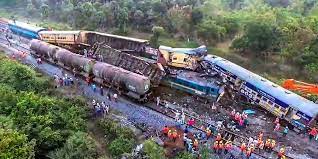
In recent years, India has been plagued by a disturbing surge in railway accidents, raising serious concerns about the safety of its extensive rail network. Despite technological advancements and promises of enhanced safety, the Indian Railways have struggled to keep passengers safe, leading to catastrophic accidents, with the latest being the tragic train collision in Andhra Pradesh on a fateful Sunday 29th October 23. This catastrophe evoked memories of the horrifying Odisha rail accident, shedding light on the dire need for a comprehensive safety overhaul. On June 2, 2023, the nation was left shocked by the devastating rail accident in Odisha, where three trains collided in a horrific accident. The crash resulted in a staggering death toll of 296 and left more than 1,200 others injured. This tragedy marked India’s deadliest railway accident in decades and sent shockwaves across the country. Unfortunately, it was not an isolated incident, as India’s railways have been grappling with a growing number of accidents in recent years.
The root causes of these accidents are varied, with the majority attributed to human error, followed closely by technical failures and natural disasters. Despite efforts to enhance safety standards through technological advancements and stricter regulations, the situation continues to deteriorate. The role of human factors in railway accidents cannot be underestimated. The railway staff responsible for operating, maintaining, and managing the trains and tracks are prone to human errors, driven by factors such as fatigue, negligence and a disregard for safety rules. These errors can lead to wrong signaling, miscommunication, over-speeding, and the overlooking of defects or hazards. Inadequate training and communication skills further exacerbate the problem, affecting performance and coordination.
The railway infrastructure, including tracks, bridges, overhead wires, and rolling stock, often suffers from defects due to poor maintenance, aging, vandalism, sabotage, or natural disasters. A significant portion of this infrastructure remains outdated, originally built in the 19th and 20th centuries, ill-equipped to handle the growing demand and modern standards. Moreover, a lack of funds and ineffective Measures, have hampered its development and maintenance.
Furthermore, over 100% capacity utilization on many routes has created congestion and overloading, increasing the risk of accidents due to these deteriorating conditions. This dire state of affairs calls for an immediate safety overhaul to protect the millions who depend on India’s railways for their daily commute.
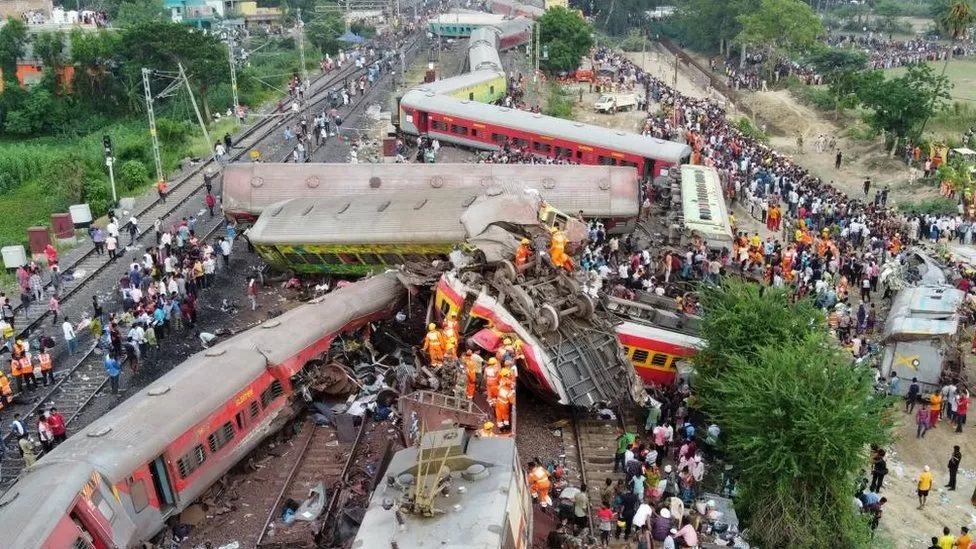
The tragic incidents in Andhra Pradesh and Odisha should serve as a wake-up call for Indian Railways to prioritize passenger safety. It is essential to invest more in safety-related works, allocate funds for track renewal, bridge repair, signalling upgrades, and coach refurbishment. The railway staff must be rigorously trained to minimize human errors, with an emphasis on the latest technologies, safety protocols, and procedures.
Unmanned level crossings (UMLCs) pose a high risk and must be eliminated through the construction of road overbridges (ROBs) or road underbridges (RUBs). Advanced technologies like anti-collision devices (ACDs) should be installed to prevent accidents, and the existing tracks should be maintained and upgraded to meet modern safety standards.
Establishing a Statutory Railway Safety Authority with the power to frame safety standards, conduct safety audits, and enforce accountability is a crucial step. The safety of the railway staff, passengers, and the general public should take precedence in all railway operations. Improved communication and coordination among railway departments is also vital to enhancing safety. India’s railway management must undergo a transformative shift, focusing on shared commitment to safety, correction of issues, and active listening to staff voices at all levels. Overworking staff must be addressed by filling vacancies and reducing long working hours, especially for Rail Crew .
India’s railway modernization drive should extend to safety, ensuring that older trains receive the necessary upgrades and maintenance. While the nation boasts high-speed trains and state-of-the-art stations, the safety of the entire rail network, including the millions of passengers who rely on it daily, should remain a top priority.

The recent rail accidents in Andhra Pradesh and Odisha have cast a shadow of doubt over the safety of India’s railway system. Despite some progress in infrastructure and technology, passenger safety remains a significant concern. Urgent measures are required to enhance safety standards, reduce human errors, upgrade aging infrastructure, and prioritize the well-being of the railway staff and passengers. The Indian Railways must make safety its topmost mission to prevent further tragic incidents and ensure the well-being of its passengers and the nation as a whole.
visit arjasrikanth.in for more insights.
 SOCIAL PERSPECTIVES