Vizhinjam International Transhipment Sea Port: A Kerala Dream Anchored by Union Government Support, Crafted with the Vision of Gautam Adani – Karan Adani’s Prime Mover Role and Rajesh Jha’s Grit in a Three-Decade Triumph

The dream of constructing India’s first transhipment port at Vizhinjam, located at the tip of the nation, faced insurmountable challenges and obstacles for nearly three decades. Many tried, but none succeeded until the convergence of the Kerala Government’s vision, the Union Government’s support, and the entrepreneurial acumen of Mr. Gautam Adani, led by the relentless determination of his son, Mr. Karan Adani. Additionally, on the field, Mr. Rajesh Jha and his team overcame countless difficulties to bring this dream to fruition.
For thirty years, successive state governments in Kerala grappled with the ambitious vision of building a transshipment port at Vizhinjam. At one point, even the Navy was considered to be involved in this colossal project. However, it wasn’t until 2014 when a letter from KM Chandrashekar, a former cabinet secretary, to Montek Singh Ahluwalia, the then deputy chairman of the Planning Commission, breathed new life into the project. Infrastructure advisor Gajendra Haldea, renowned for his contributions to significant infrastructure projects, was instrumental in moving the project forward. It was concluded that this project could only be viable under the Public-Private Partnership (PPP) model.
After exhaustive analysis, a private bidder, Adani Group, stepped in to take on the massive responsibility of building the Vizhinjam Port. Three rounds of bidding had failed to attract takers until the Adani Group’s entry. Shashi Tharoor, the Congress party’s Lok Sabha member from Thiruvananthapuram, played a pivotal role in convincing Mr. Gautam Adani to join the bidding. Subsequently, a 40-year concession agreement was drawn up between the Kerala Government and Adani Vizhinjam Ports Pvt Ltd, setting the stage for a historic development.
The Adani Group’s engineers and staff described the Vizhinjam Port as their toughest project to date. The port’s significant advantage lies in its natural depth, but it posed a unique challenge—it lay a kilometre away from the shore. Building a breakwater to provide shelter and ease ship berthing became the most significant hurdle for Mr. Rajesh Jha and his team. A breakwater in the sea, which would be submerged, and extend for approximately one kilometre, was an unprecedented engineering feat. A unique L-shaped design was conceived, creating a structure that resembled a submerged 10-story building, with only a couple of floors above water. It was an engineer’s nightmare, according to those who worked on the project.
In addition, sourcing the required 8 million tonnes of stone, which had to come in specific shapes and sizes, was another logistical challenge. Despite needing 10,000 stones daily, the company could only secure 5,000. Obtaining permits to operate quarries also became a bureaucratic struggle. The construction was further constrained by Kerala’s monsoon season, allowing only a seven-month window for work each year. Cyclone Ockhi in 2017 and the devastating Kerala floods of 2018 posed significant setbacks, leading to non-working days and financial losses. Each day of delay cost around ₹1.5 crore to service debt, adding to the project’s financial challenges.
The construction of the Vizhinjam Port faced opposition and environmental concerns. The local population blamed the project for sea erosion on the northern side and sand accretion on the southern side, impacting the lives and livelihoods of the fishing community. A National Green Tribunal case challenged the project, even though it ruled in favor of the port in 2015. The construction of the breakwater and its impact on the environment became a point of contention, leading to an expert panel’s involvement in monitoring potential environmental damage. Despite the panel attributing the environmental changes to climatic events, it raised questions about the premises on which the port’s legal validity was obtained.
Despite countless hurdles, protests, and environmental concerns, the Vizhinjam Port is a dream that has finally become a reality. As the first ship to enter its waters carried cargo from China, on 15th October 2023, symbolizing the triumph of determination and perseverance.

The Vizhinjam Port stands as a testament to the remarkable vision of the Kerala and Union Governments, the entrepreneurial spirit of Mr. Gautam Adani, the relentless dedication of Mr. Karan Adani, and the unwavering resolve of Mr. Rajesh Jha and his team in the face of daunting challenges. The port’s strategic location, coupled with its natural depth, marks a significant milestone in India’s quest to reduce its dependency on foreign transshipment hubs and bolster forex reserves.
In the decades to come, the Vizhinjam Port is poised to play a pivotal role in the growth of India’s maritime trade and economy. This achievement is not just a testament to India’s potential but also an inspiration for future endeavors in infrastructure development and nation-building. With an entrepreneurial vision and dedicated teams, the country can overcome any challenge and set new benchmarks on its path to progress and prosperity.
The inauguration of the Vizhinjam Port is a proud moment for India, symbolizing the relentless pursuit of dreams against all odds. This historic event will forever be etched in the annals of the country’s development, as a reminder that dedication and vision can turn the most ambitious dreams into a reality.
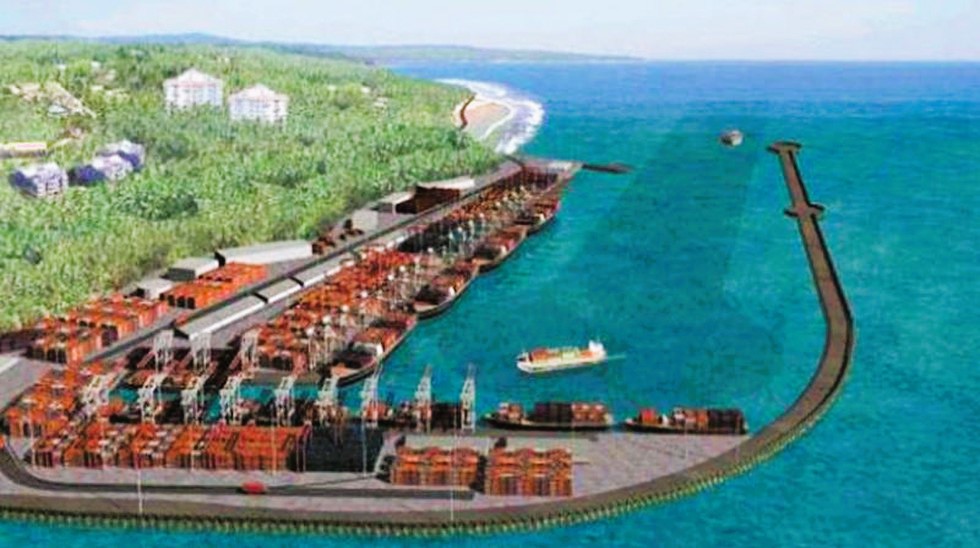
As we look to the future, the Vizhinjam Port will stand as a beacon of hope, illuminating the path of progress for generations to come.
Visit arjasrikanth.in for more insights.
 SOCIAL PERSPECTIVES