In a world marred by conflict and uncertainty, Charlie Chaplin’s words offer a timeless reminder of the importance of unity, compassion, and the pursuit of a better world.
Two years of the COVID-19 pandemic have seen a significant reduction in large-scale warfare. The lockdowns and restrictions imposed worldwide inadvertently put a pause on traditional conflicts. Yet, despite these moments of respite, the world is far from free of violence, with tensions and violence re-emerging in places like Ukraine, Gaza, and other regions. It raises the question: Is the arms industry a driving force behind these conflicts, placing commercial interests over humanity?
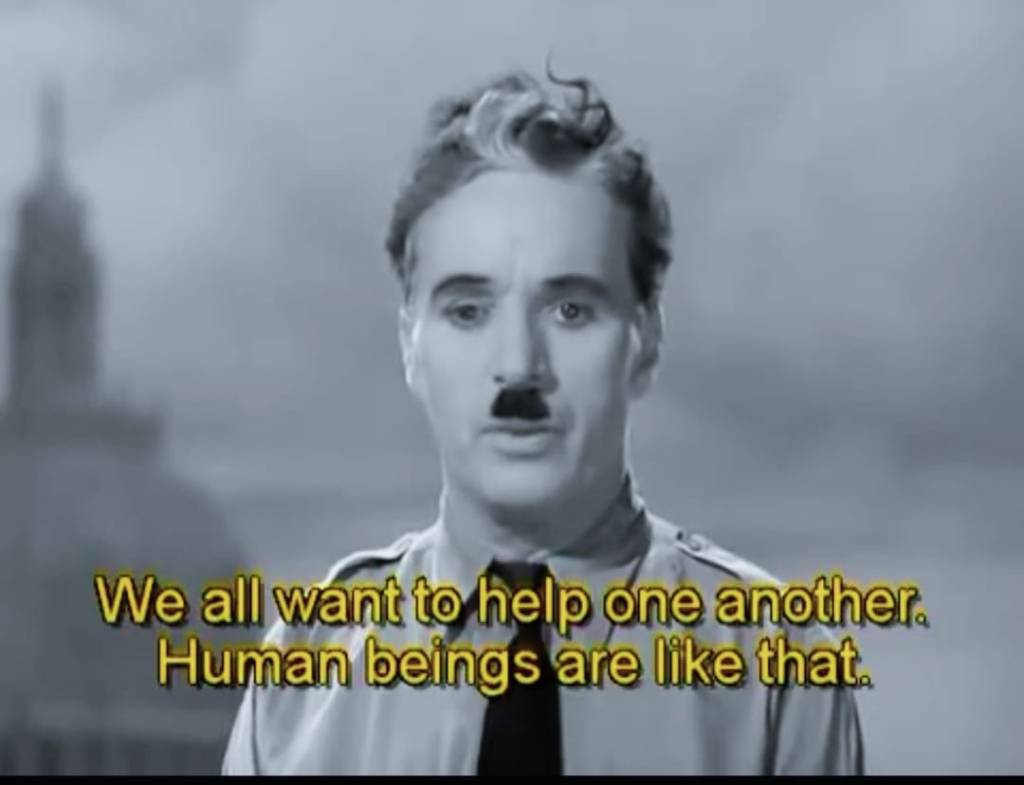
It is at this juncture that we find solace in the words of the iconic comedian and actor, Charlie Chaplin. His powerful speech in “The Great Dictator” holds a profound message that remains poignant in today’s conflict-ridden world. In the film, Chaplin played both a ruthless dictator and a Jewish barber. It’s through the barber’s character that Chaplin delivered a speech that transcends the boundaries of time and resonates deeply with the ongoing global issues.
“I’m sorry, but I don’t want to be an emperor. That’s not my business. I don’t want to rule or conquer anyone,” Chaplin’s character declares. His words reflect a sentiment that resonates with those who value humanity above power and domination. It’s a sentiment that transcends political and cultural divides, echoing the shared desire for peace, harmony, and unity.
In these times, when conflicts and power struggles seem pervasive, it’s essential to remember the core of Chaplin’s message. He reminds us that we all share a common goal: “We all want to help one another.” It doesn’t matter whether we are Jewish or Gentile, Black or White; our common humanity unites us. We seek to live in a world where happiness, not misery, prevails, a world where hatred has no place. Chaplin’s character expresses a vision of abundance, where the earth’s resources can provide for everyone, and life can be “free and beautiful.”
However, Chaplin’s character also laments the state of the world, recognizing that greed has poisoned humanity’s souls, breeding hate and violence. In his time, the world had advanced technologically, yet this progress had not necessarily translated into better lives. The character contends that more than machinery, humanity needs kindness and gentleness. It’s a plea for empathy, compassion, and love to be our guiding principles.
In today’s world, where technological advancements continue at an unprecedented pace, Chaplin’s words are a reminder of what we need most. “More than machinery, we need humanity. More than cleverness, we need kindness and gentleness.” These qualities, he asserts, are indispensable for preventing violence and preserving our humanity. As we engage with the internet, artificial intelligence, and rapid communication, it’s easy to forget the importance of these virtues. Yet, they are more critical than ever in ensuring that our progress benefits all of humanity.
Chaplin’s message takes on even greater significance when considering the impact of conflicts on individuals and societies. He speaks to those who are driven by the pursuit of power, control, and dominance. He calls them “brutes” who regiment lives, dictate thoughts, and treat individuals as mere tools. In a world where totalitarianism still exists, his call to resist such oppressors is as vital as ever.
The speech reaches its climax with a call for unity. “Let us fight for a new world,” he implores. It’s a world that offers opportunities to work, secures peace, and provides a promising future for the youth and security for the elderly. In a time when the world faces the challenge of rebuilding post-pandemic societies, Chaplin’s message encourages us to fight for a world that is fair, inclusive, and just.
Chaplin’s character acknowledges that promises from those in power often go unfulfilled. Dictators may free themselves, but they enslave the people. His call to action, “Let us fight to fulfill that promise,” reminds us that the responsibility falls on us all. It’s a call to action that transcends national boundaries and seeks to dismantle the barriers of greed and intolerance.
Today, the world faces numerous crises, from the ongoing pandemic to climate change, political unrest, and economic disparities. Chaplin’s timeless message calls upon each of us to embody the change we wish to see in the world. It encourages us to unite, not in the pursuit of power, but in the name of democracy, progress, and humanity.
In a world characterized by both extraordinary progress and persistent conflicts, Chaplin’s speech serves as a beacon of hope. It reminds us that regardless of the challenges we face, our shared humanity can prevail. Chaplin’s call for unity, compassion, and kindness remains a profound reminder that, in the face of adversity, the power of humanity can triumph over the forces of discord and division.
Let us unite as a global community and remember the wisdom of Chaplin’s words as we work towards a world where the pursuit of humanity is the need of the hour. In unity, we can create a world that is free, beautiful, and filled with the promise of a better future for all.
visit arjasrikanth.in for more insights
 SOCIAL PERSPECTIVES
One response to ““Humanity above All: Revisiting Charlie Chaplin’s Timeless Message””
It’s one of my favorite films from that era.
LikeLike