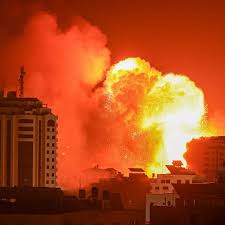
The recent escalation of tensions between Israel and Hamas has garnered global attention, and India finds itself in a delicate position as it navigates the complexities of the conflict. With a large Indian diaspora in the region and significant economic interests at stake, India has a responsibility to protect its citizens and maintain diplomatic relations with both Israel and the Arab world. This article delves into India’s stance on the Israeli-Hamas war and its efforts to evacuate Indian nationals from the war zone.
Initially, India’s Ministry of External Affairs (MEA) maintained silence on the issue, which raised eyebrows in the region. However, after five days, the MEA finally issued a statement acknowledging the universal obligation to observe international humanitarian law and the global responsibility to fight terrorism in all its forms. The MEA spokesperson also emphasized India’s support for the resumption of direct negotiations and the establishment of an independent and viable state of Palestine.
India’s silence and delayed response can be attributed to the delicate diplomatic balancing act it must perform. India has close ties with both Israel and the Arab world, which are divided on this issue. With partners on both sides of the conflict, India faces the challenge of maintaining relationships while taking a principled stand on terrorism and advocating for peace.
The Arab world’s stance on the conflict has shifted due to recent normalization processes, such as the Abraham Accords between Israel, the UAE, and Bahrain. Saudi Arabia has also shown signs of warming relations with Israel. However, countries like the UAE, Bahrain, Kuwait, and Oman have been critical of Israel’s actions. India finds itself in a unique position due to its significant presence and economic interests in the region.
India’s support for Israel during these trying times has been acknowledged and appreciated. The Israeli ambassador to India expressed gratitude towards Prime Minister Modi for his support. While waiting for an official statement, diplomats expressed the importance of an official stance from the Indian government. The Indian government has launched Operation Ajay to repatriate Indian citizens who wish to return home.
India has initiated the evacuation process by sending chartered aircraft to safely bring back Indian citizens from the conflict zone. The first batch of 230 Indian nationals is expected to return on Friday. The Indian embassy has urged all Indians in the region to register and provide their exact location and willingness to return. The repatriation process will be based on the number of individuals willing to come back to India.
The repatriation process poses challenges due to the volatile situation in the region. While Israel is not under constant conflict, certain areas are witnessing intermittent attacks. Ensuring the safety of Indian nationals in Gaza and finding safe routes for their evacuation remains a priority. The Indian government must carefully plan and execute the repatriation process, taking into account the risks involved.
India finds itself in a delicate position as it stands in solidarity with Israel while maintaining its diplomatic ties with the Arab world. The MEA’s statement reflects India’s commitment to international humanitarian law and the fight against terrorism. The evacuation efforts demonstrate India’s dedication to ensuring the safety of its citizens caught in the crossfire. As the conflict continues, India must continue to balance its interests and work towards a peaceful resolution for all parties involved.
visit arjasrikanth.in for more insights
 SOCIAL PERSPECTIVES