“Unlocking the Potential of Data-Driven Policies for Marginalized Communities”
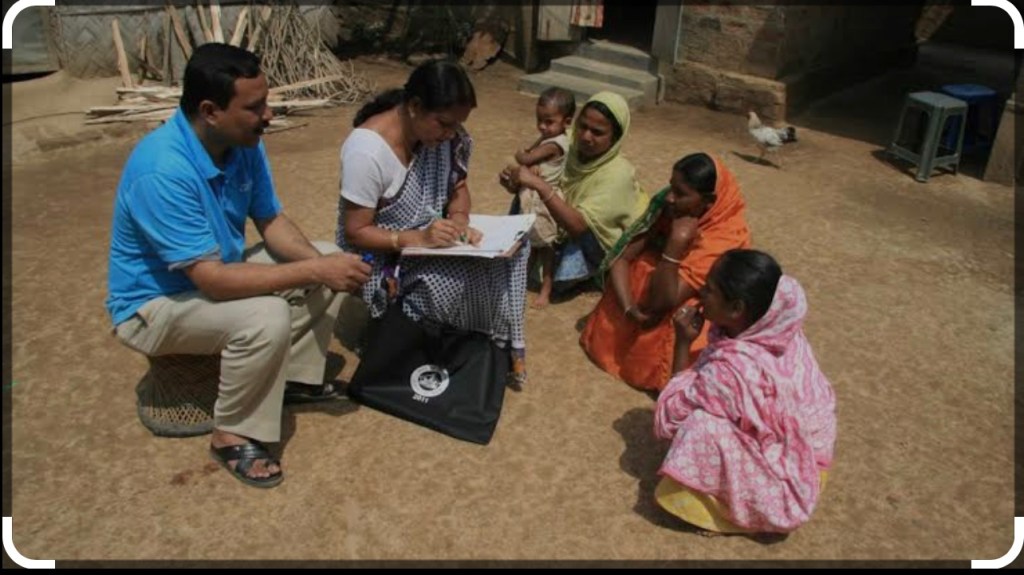
In the ever-evolving landscape of India’s socio-political discourse, the topic of a caste census has once again taken center stage. The demand for a comprehensive caste census, which includes the enumeration of Other Backward Classes (OBCs) and other marginalized groups, has gained momentum, sparking debates and discussions across the nation. In this article, we delve into the advantages of conducting a caste census and why it should transcend the realm of politics to usher in a new era of socio-economic development and inclusivity.
Census in India has a rich history dating back to the colonial exercise of 1881. It serves as a critical tool for the government, policymakers, academics, and more, allowing them to capture population data, allocate resources, track social changes, and conduct delimitation exercises. However, it has often been criticized as a blunt instrument unsuitable for specialized inquiries.
On the other hand, the Socio-Economic and Caste Census (SECC) was first conducted in 1931. Its primary objective was to gather information on the economic status of Indian families, both in rural and urban areas, with a specific focus on identifying indicators of deprivation. Additionally, SECC collects data on specific caste names to evaluate the economic conditions of different caste groups.
Caste-based discrimination still persists in various parts of India. A caste census can play a pivotal role in identifying disadvantaged groups and ensuring that they receive the attention and resources they rightfully deserve. By understanding the distribution of different caste groups, targeted policies can be formulated to address social inequality and uplift marginalized communities.
Accurate data on the population of OBCs and other marginalized groups is essential to ensure the equitable distribution of resources. A caste census can provide insights into the socio-economic conditions and needs of different caste groups, enabling policymakers to design policies that cater to their specific requirements and promote inclusive development.
Affirmative action policies, such as reservations for OBCs and other marginalized groups, aim to promote social justice. However, without proper data on the population, it becomes challenging to evaluate the impact and effectiveness of these policies. A caste census can facilitate the monitoring of these policies’ implementation and outcomes, allowing policymakers to make informed decisions regarding their continuation and modification.
Caste is an integral part of Indian society, influencing social relationships, economic opportunities, and political dynamics. Conducting a caste census can provide a comprehensive picture of the diversity within Indian society, shedding light on the social fabric and the interplay between different caste groups. This data can contribute to a better understanding of social dynamics.
Article 340 of the Indian Constitution mandates the appointment of a commission to investigate the conditions of socially and educationally backward classes and make recommendations on steps that should be taken by governments. A caste census aligns with this constitutional provision.
While there are compelling arguments in favor of a caste census, there are also valid concerns raised by opponents: Critics argue that caste-based discrimination is illegal, and a caste census could inadvertently reinforce the caste system. They emphasize the importance of focusing on individual rights and equal opportunities for all citizens rather than categorizing people based on their caste identities ; Defining castes is a complex undertaking, as there are thousands of castes and sub-castes in India. Critics argue that attempting to classify them could lead to confusion, disputes, and further divisions within society ;Some fear that a caste census could exacerbate social divisions. They contend that promoting social harmony by emphasizing commonalities among people is more beneficial for national integration.
The Government of India, in 2021, stated in Lok Sabha that it had decided as a matter of policy not to enumerate caste-wise population other than Scheduled Castes (SCs) and Scheduled Tribes (STs) in the Census.
The SECC conducted in 2011 aimed to collect comprehensive data on socio-economic indicators, including caste information. However, the raw caste data collected in the SECC has not yet been released or effectively utilized due to concerns over data quality and classification challenges.
As the demand for a caste census gains momentum, it is essential to consider independent studies at the district and state levels to acquire caste and sub-caste data. Moreover, the data must not be weaponized for political gains but should serve as a means to promote social justice and inclusivity.
In conclusion, while there are arguments both for and against a caste census, the importance of accurate data on the population of OBCs and other marginalized groups cannot be overstated. Such data is crucial for policymakers to promote social justice and ensure equitable resource distribution. It is imperative that policymakers carefully weigh these arguments to pave the way for a more equitable and just society—one where every citizen has the opportunity to thrive.
Visit arjasrikanth.in for more inputs
 SOCIAL PERSPECTIVES