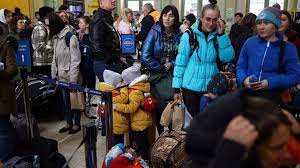
The year 2022 brought unprecedented challenges to the world, including a surge in global migration due to conflicts and crises. The invasion of Ukraine by Russia, along with other conflicts and food insecurity in various regions, pushed the number of displaced people globally above 100 million. While the response to the Ukrainian crisis was characterised by openness and support from countries, especially in the European Union, it highlighted the need for more humanitarian-centric approaches in decision-making concerning migration.
The invasion of Ukraine forced approximately 7.8 million Ukrainians to flee their homeland, with the majority seeking refuge in the European Union. The response from the EU was swift and welcoming. Ukrainians were granted visa-free entry for up to 90 days before the invasion. After the war began, the EU invoked the Temporary Protection Directive, offering displaced Ukrainians residence, work rights, access to education, and benefits.
Countries outside Europe, including the United States and Canada, also extended their support. The U.S. introduced a program allowing residents to sponsor Ukrainians, while Canada approved hundreds of thousands of emergency temporary visas. This warm reception stood in contrast to the treatment of asylum seekers from other regions.
In contrast to the relatively favourable conditions for Ukrainians, asylum seekers from regions like Africa and the Middle East faced scepticism and anxiety in 2022. They often lacked legal avenues to enter EU Member States and competed for limited housing and assistance resources. Many found themselves sleeping on the streets in European cities, reminiscent of the challenges faced during the 2015-16 refugee and migration crisis. The number of new humanitarian migrants in some EU Member States approached levels seen during the 2015-16 crisis. This influx of displaced people posed new integration challenges and raised questions about their potential return to their home countries.
While many displaced Ukrainians found employment relatively quickly, often in lower-skilled jobs, the unique gender dynamics of this crisis presented complexities. Approximately 86 percent of displaced Ukrainians are women and girls, a departure from the typical gender balance among forcibly displaced populations. This disparity requires special attention in terms of integration and support.
Displaced Ukrainians enjoy temporary legal status in the EU, the U.S., and Canada, among other countries. However, this status has an expiration date, raising questions about their future beyond the designated period. Host communities also grapple with the long-term integration challenges posed by this crisis, exacerbated by rising energy costs and the cost of living.
Russia’s invasion of Ukraine had ripple effects on Russian emigrants living abroad. There was growing animosity toward wealthy oligarchs who had established residence and assets in Western countries. Governments seized assets, imposed sanctions, and even forced the sale of assets like British soccer clubs. Several countries, including Estonia, Latvia, Lithuania, and Poland, implemented border restrictions on Russian tourists.
The conflict in Ukraine prompted changes in migration patterns from Russia. Thousands of young men fled Russia due to the draft, primarily seeking refuge in Central Asia. This mass influx overwhelmed local officials and stirred ambivalence in local communities. While these Russian arrivals promised economic benefits, they also drove up living costs and revived memories of the Soviet era. As Russian migrants’ stay in host countries endures, there is potential for increased tensions, particularly if competition for jobs, housing, and services intensifies. The evolving dynamics of Russian migration raise questions about host countries’ responses and their ability to balance geopolitical considerations with local communities’ concerns.
The global migration challenge is a complex and evolving issue, necessitating a compassionate and adaptable approach. The response to the Ukrainian crisis demonstrated that humanitarian-centric approaches are not only possible but also effective in addressing displacement. However, the treatment of non-Ukrainian asylum seekers underscored the need for greater equity and fairness in migration policies. As conflicts persist and new crises emerge, policymakers, service providers, and host communities must remain vigilant and flexible in their responses. Long-term integration challenges, changing migration patterns, and the humanitarian imperative require continuous attention and collaboration at the international level. By prioritising the welfare and rights of displaced people, the global community can navigate the complexities of migration with empathy and solidarity.
Visit arjasrikanth.in for more insights
 SOCIAL PERSPECTIVES