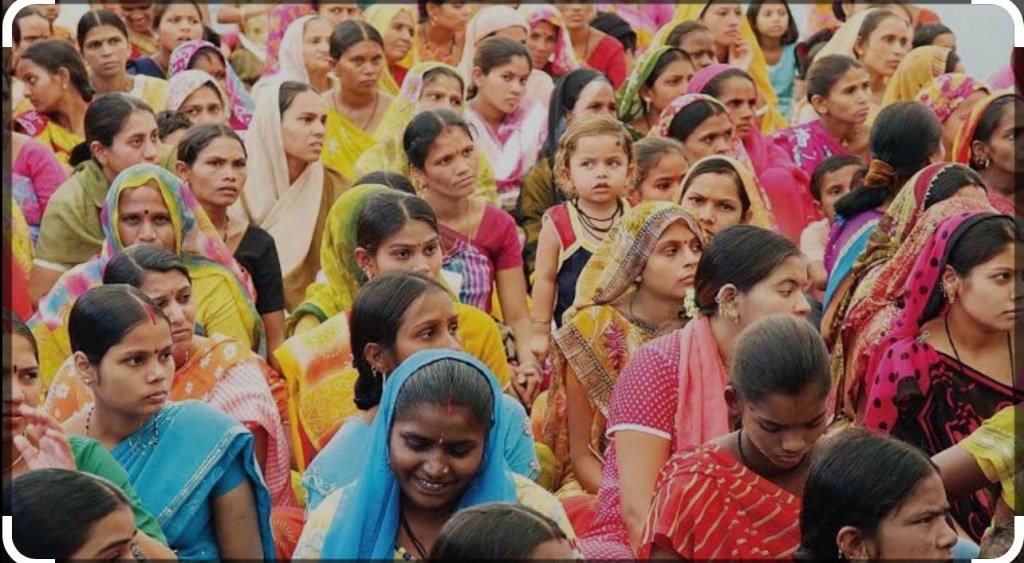
Title: Unleashing India’s Economic Potential: The Power of Gender Parity and Women’s Employment
In India’s pursuit of economic growth, one often-overlooked resource is its women workforce. A recent report by the McKinsey Global Institute sheds light on this untapped potential, revealing that India could add a staggering $2.9 trillion to its annual GDP by 2025 by advancing gender parity and harnessing the full potential of women in the workforce. This article explores the implications of this report, the challenges India faces, and the path to realizing this economic opportunity.
India is poised to be the largest beneficiary of efforts to improve gender parity, potentially gaining nearly a quarter of the global economic potential of $12 trillion that can be achieved through gender parity worldwide. The report indicates that by improving gender parity alone, India could double the contribution of its women workforce to its GDP in the next decade.
Achieving gender parity is no easy feat and requires addressing various facets of society. India’s gender parity score is among the lowest globally, despite being a liberal democracy with equal rights guaranteed by its constitution. Both India and the Middle East share a similar gender parity score of 0.48, highlighting the pressing need for improvement. In contrast, North America and Oceania boast the highest gender parity scores at 0.74.
McKinsey’s report outlines six types of government interventions to bridge gender gaps effectively:
1. Creation of Economic Opportunity: Expanding job opportunities for women.
2. Capability Building: Enhancing women’s skills and capabilities for better employment prospects.
3. Legal Reforms: Implementing new laws, policies, and regulations to promote gender equality.
4. Advocacy Efforts: Shaping attitudes and societal perceptions about women’s roles.
5. Financial Incentives and Support: Providing incentives and financial support for women’s economic empowerment.
6. Technology and Infrastructure: Leveraging technology and infrastructure to facilitate women’s participation in the workforce.
These interventions can significantly boost women’s employment and increase their contribution to GDP.
Currently, women account for only 37% of global output, despite comprising half of the working-age population in many countries. In India, women contribute a mere 17% to the GDP, even lower than the global average. Women’s share in GDP stands at 18% in the Middle East and North Africa and a more respectable 24% in South Asia, excluding India. In contrast, North America, Oceania, China, Eastern Europe, and Central Asia see women contributing around 40 to 41% to GDP.
One significant obstacle to women’s greater participation in GDP is the disproportionately large share of unpaid work they perform, estimated at a staggering 75%. This includes household chores, caregiving, and other unpaid responsibilities that are not factored into GDP calculations. The value of unpaid work done by women globally is estimated at $10 trillion, roughly 13% of the global output.
To unlock the full potential of women in the workforce, a crucial step is to increase women’s labor force participation rates from the current global average of 64% to 95% by the next decade. While this is a challenging task, realistic progress is expected, with Western Europe closing the gender gap in work participation rates by 1.5 percentage points annually and East and South East Asia by 1.1 percentage points each year. These efforts could raise the global work participation rate for women to 74% by 2025.
India faces a formidable challenge in increasing its female work participation rate from the current 25.6% to match the male participation rate of 51.7%. Addressing this challenge is crucial for achieving a more equitable gender parity and justice for the largest disadvantaged group in Indian society.
A significant aspect of this discussion is the contribution of unpaid domestic work performed by women. According to a report by the State Bank of India’s research team, unpaid domestic work, including caregiving, amounts to approximately 7.5% of India’s GDP. This vast contribution remains largely outside the realm of economic production, complicating economic policy considerations. The report highlights that understanding the role of unpaid work is essential to comprehend women’s labor force participation fully. While the specific figures may vary, other studies also emphasize the substantial value of women’s unpaid work.
India’s journey toward economic growth should include unleashing the economic potential of its women workforce. McKinsey’s report provides a roadmap for achieving gender parity and boosting women’s employment, which could add trillions to India’s GDP. Addressing societal attitudes and legal reforms are key components of this transformation. Additionally, recognizing the value of unpaid work and empowering women economically are crucial steps toward realizing India’s full economic potential. By advancing gender parity, India can not only uplift its economy but also ensure justice and equal opportunities for women.
Visit arjasrikanth.in for more insights.
 SOCIAL PERSPECTIVES