Title: Counting Caste: The Need for a Caste Census in India
Caste, deeply embedded in the fabric of Indian society, has been a subject of both division and debate since the country’s independence in 1947. Despite efforts to eradicate the pernicious influence of caste, its specter still looms large over Indian democracy. This article delves into the pressing need for a caste census in India, shedding light on its significance in understanding and addressing social disparities.
India’s post-independence leaders envisioned a society free from the shackles of caste discrimination and prejudice. However, seven decades later, the reality paints a different picture. While the Indian Constitution provided for affirmative action measures, such as reservations for Scheduled Castes (SCs) and Scheduled Tribes (STs), the situation for the Other Backward Classes (OBCs) remains largely unchanged. The OBCs, often referred to as Bahujans, find themselves marginalized in the socio-economic and political landscape. Despite making up a significant portion of India’s population, their representation in positions of power, major economic assets, and educational institutions remains negligible. It is evident that the promise of social justice for OBCs has yet to materialize fully.
In the early 1970s, a wave of change swept through Indian politics with leaders from dominant agrarian castes rising to prominence. This shift challenged the long-standing hegemony of the Congress party. The rhetoric of socialism and social justice mobilized lower castes and Dalits across north Indian states. Leaders like Lalu Prasad Yadav, Chaudhary Devi Lal, Mulayam Singh Yadav, Ram Vilas Paswan, Sharad Pawar, and others brought lower caste identities to the forefront of electoral politics.This era, often referred to as Mandal politics, made Indian democracy more inclusive and prevented the continuous dominance of right-wing politics in key north Indian states. However, the potency of social justice politics eventually waned, allowing divisive forces to gain ground.
Recognizing the political significance of OBCs, the Bharatiya Janata Party (BJP) adopted an “inclusive Hindutva” strategy, aiming to appeal to lower caste groups. This approach sought to address the grievances of OBCs and promised them adequate representation in power circles, special welfare policies, and a dignified social status.Since 2014, this strategy has yielded dividends for the BJP. The party has seen increased support from lower caste groups, particularly in states like Bihar, Uttar Pradesh, Haryana, and Madhya Pradesh. However, despite OBCs’ support, their socio-economic conditions have seen little improvement, and entrenched social elites still wield significant power.
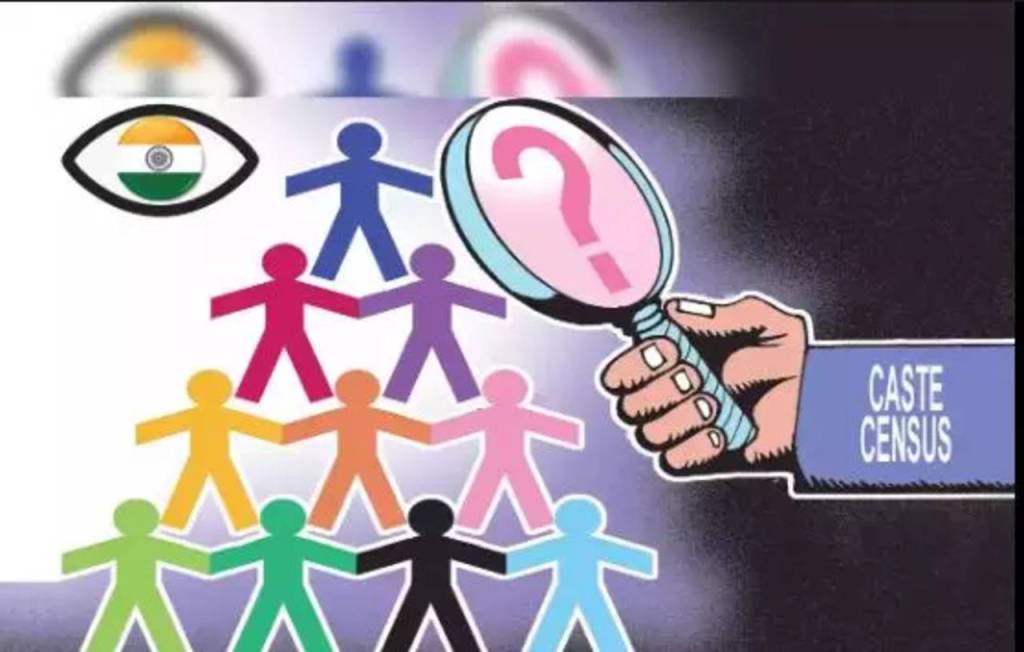
In light of the persistent disparities faced by OBCs and the BJP’s reliance on lower caste support, there is a growing demand for a caste census in India. A caste census would provide concrete data on the numerical strength of OBCs in different states, offering insights into their representation in various state institutions. Crucially, it would reveal the stark underrepresentation of OBCs in sectors such as the judiciary, education, and media, currently dominated by social elites. With this data, a new political consciousness could emerge among marginalized groups, potentially revitalizing social justice politics and challenging the BJP’s dominance.
Despite numerous appeals and recommendations from various quarters, the Indian government has displayed reluctance to conduct a caste census. This reluctance, couched in vague phrases like “operational difficulties” and “integrity of Census exercise,” has persisted for decades. The opportunity to include OBCs in the 2021 Census was missed, further perpetuating the data void. This lack of data hampers evidence-based policymaking and exacerbates conflicts over reservation quotas.
The need for a caste census in India is not merely an issue of data collection; it is a matter of social justice and democratic representation. Counting OBCs is a simple yet vital step toward addressing historical inequalities and empowering marginalized communities.
A caste census would reveal the extent of OBC underrepresentation in key sectors and foster a new wave of social justice politics. It would bring the social and economic concerns of the Other Backward Classes to the forefront of the political discourse, potentially creating a more democratic and inclusive India.
As regional parties in India gear up to revive the OBC card, the demand for a caste census remains central to their strategy. Whether this renewed focus on caste politics can challenge the BJP’s dominance and bring about meaningful change for marginalized communities remains to be seen. Nonetheless, the call for a caste census resonates as a crucial step toward a more equitable and just India.
arjasrikanth.in
 SOCIAL PERSPECTIVES